
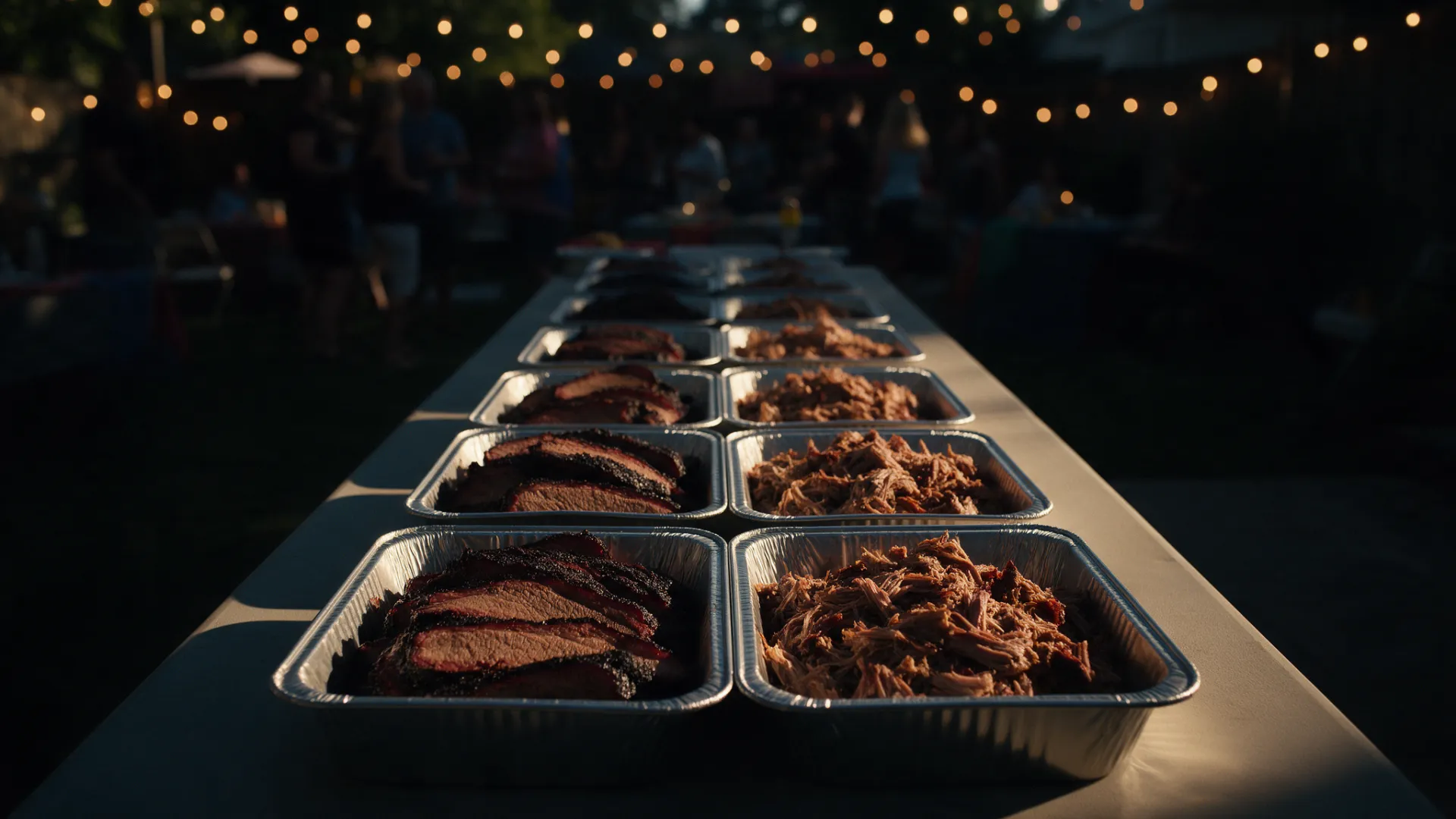
Hiring a BBQ caterer in central Queensland: what to ask and what it costs
By Tim · 27 October 2026 · 8 min read · Last reviewed 28 October 2026
Before you pay a deposit, ask a barbecue caterer seven things: their food business licence number and council, whether they have an accredited food safety program, who their food safety supervisor is, how hot the meat is kept and how they check it, their fire-ban plan, allergen information, and the total price with GST.
On this page · 13 sections
Seven questions to send a caterer
What's your food business licence number, and which council issued it?
A good answer: A licence number and the council's name, and they're happy to show you the licence.
Which licence do you operate under, and do you have an accredited food safety program?
A good answer: Which licence they hold, and if they cook at their base and serve at your place, an accredited program checked by an approved auditor. A good caterer can explain either answer.
Who's your food safety supervisor?
A good answer: A name, and a certificate from the last five years.
How will the meat get here, how hot will it be kept, and what do you check it with?
A good answer: What the meat travels and is held in, kept at 60°C (140°F) or hotter, what they check it with (a probe thermometer) and how often.
What happens if there's a fire ban on the day?
A good answer: A plan: cooking at their base and bringing it hot, finishing on gas, or a clear rule for moving the date or refunding you.
Can you give me allergen information for everything you serve?
A good answer: Yes, for every dish, shown with the food or given to you when you ask.
What's the total price with GST, how many grams of cooked meat per person does it assume, and what are the deposit and cancellation terms?
A good answer: One total figure including GST and any fees you can't avoid, a cooked weight per person, and the deposit and cancellation terms in writing.
The part you can't see
A good caterer and a gamble taste the same on the day you book them. Same smoker photos, same brisket on the Facebook page. Where they differ is between the pit and your plate. Where the meat was cooked, how it got to your place, what temperature it sat at for the two hours before anyone ate, and what happens if the weather turns.
So most of these questions are about that gap. Every one has a plain answer, and a caterer who's set up properly will give it without blinking.
Is the caterer licensed, and by which council?
In Queensland a catering business needs a food business licence from the council where the business is based. The Food Act 2006 names "a catering business" as an example, and running one without a licence can bring fines in the six figures.
There's no public online register of caterers, which means you can't look it up yourself. A licence is a real document though. It shows the business name, a licence number, the premises and the conditions, so ask to see it, and if you're unsure, you can ring the council that issued it.
Do they need a food safety program?
If a caterer cooks at their own base and serves the food at your place, the Act calls that off-site catering. Off-site caterers need an accredited food safety program. That's a written plan of what could go wrong with the food, how each risk is controlled and checked, and what records get kept. An approved auditor checks it before the council accredits it, and it keeps getting audited after that.
Food sold from a licensed food van or a temporary stall isn't off-site catering under the Act, so not every barbecue setup needs one. Which way a smoker trailer at a private event falls is the council's call. Ask the caterer which licence they operate under and whether that means a food safety program. A good caterer can explain either answer.
Who's the food safety supervisor?
Every licensed food business has to have a food safety supervisor. Caterers are "category one" businesses under the national Standard 3.2.2A, which means the supervisor holds a certificate from the last five years, the staff handling food are trained, and records like temperatures get written down every day and kept for at least three months.
Ask for the supervisor's name.
How hot will the meat be kept, and how will they check?
Hot food has to stay at 60°C (140°F) or hotter in transport and on the table, and cold food at 5°C (41°F) or colder. "It's in the hot box" isn't a temperature. A good answer names what the meat is held in and what they check it with, a probe thermometer, and how often.
I hold at 65°C (149°F) which is a food safe temp and slice to order so it stays hot and juicy. But I learnt how easy it is to get the hold wrong from an experiment in July. I was testing a benchtop oven as a holding box for a brisket, meant to sit at 63–65°C (145–149°F). The brisket was cooling faster than it should, and when I put a probe in the oven air it read 57.2°C (135.0°F), under the 60°C line. The meat was the better instrument. Then I overcorrected, turned the oven up, and the brisket sat at 72.4°C (162.3°F) for over two hours and dried out. Wrong both ways, and I was logging every number.
Which is why "how do you check?" matters more than "what temperature?".
What happens if there's a fire ban?
Nobody else seems to ask about fire bans, and in central Queensland it's the question most likely to bite. Every outdoor wedding has a wet-weather plan. A wood-fired smoker needs a fire-ban plan.
The Queensland Fire Department declares local fire bans in hot, dry, windy weather. Its current guidance says barbecues that burn timber are prohibited during a ban, while gas and electric ones are allowed if they're contained and attended. An offset smoker burns timber. But the ban declarations themselves have been worded differently over the years. The October 2025 ban over Bundaberg and Gladstone allowed an attended "properly constructed barbeque", and Rockhampton council's local-law sheet says no fires at all during a declared ban. The wording of the ban on the day decides.
So ask what they'll do. Answers worth hearing are cooking at their base and bringing it hot, finishing on gas, or a clear rule for moving the date or refunding you. Whichever it is, the meat still has to arrive at 60°C or hotter.
Can they tell you what's in everything?
Food without a label still has to come with allergen information, shown with the food or given to you when you ask. That's a legal requirement in Australia. If someone at your event has an allergy, ask before you book.
What does BBQ catering cost?
None of the central Queensland barbecue caterers I could find publish a price, they quote, so there isn't a local going rate I can point you to. The only per-head prices I found published are from two city barbecue caterers, one in Sydney and one in Melbourne, at $35 to $60 a head for the food, depending on how many meats. Service was extra, $350 for a two-hour window at the Sydney one. Those are city prices, and they're a rough guide at best for here.
What matters more is what's in the quote. Per person should be for cooked weight. Nobody other than dogs like raw brisket! I aim for about 200g per person for a normal sized feed, so ask how many grams of cooked meat the price assumes, and you can compare two quotes properly. Then ask what's charged on top, like staff, travel, equipment, set-up and clean-up.
By law a business has to show you the total price as one figure, including GST and any fees you can't avoid. A small caterer may not charge GST at all, since registration only kicks in at $75,000 turnover, and that's fine. You can check an ABN and its GST status for free on ABN Lookup. Get the deposit, cancellation terms and minimum numbers in writing before you pay, and ask if they're insured.
Why brisket needs notice
A brisket is an all-night job. On one of my cooks the fire was lit about 4am, a small 2.1kg flat came off the pit at half past eleven, and it went on the table at five. A whole brisket takes longer. Which means a barbecue caterer books weeks out, and can't add brisket the day before because someone's cousin is coming after all.
Before you pay a deposit
Copy these into a message and send the same list to each caterer you're considering.
- What's your food business licence number, and which council issued it?
- Which licence do you operate under, and do you have an accredited food safety program?
- Who's your food safety supervisor?
- How will the meat get here, how hot will it be kept, and what do you check it with?
- What happens if there's a fire ban on the day?
- Can you give me allergen information for everything you serve?
- What's the total price with GST, how many grams of cooked meat per person does it assume, and what are the deposit and cancellation terms?
Quick answers
Does a BBQ caterer need a licence in Queensland?
Yes. Under Queensland's Food Act 2006 a catering business is a licensable food business, licensed by the council where it's based. A caterer who cooks at their base and serves at your venue is doing off-site catering, which also needs an accredited food safety program checked by an auditor. Ask for the licence number and which council issued it.
How hot should BBQ meat be kept before it's served?
At 60°C (140°F) or hotter, from when it leaves the cooker until it's eaten, and cold food at 5°C (41°F) or colder. If hot food drops below 60°C, Australian guidance gives it four hours in total before it has to be thrown out. A caterer should hold meat in heated or insulated gear and check it with a probe thermometer.
Can a wood smoker be used during a fire ban in Queensland?
Possibly not. The Queensland Fire Department's current guidance says barbecues that burn timber are prohibited during a fire ban, while gas and electric ones are allowed if contained and attended. Some past ban declarations allowed a properly built barbecue, so the wording of the ban on the day decides. For an event in fire season, ask your caterer what they'll do if a ban is declared.
What should a BBQ catering quote include?
The food price per head and how many grams of cooked meat that assumes, plus anything charged separately, like staff, travel, equipment, set-up and clean-up. A business must show you the total price including GST and any fees you can't avoid. Get the deposit, cancellation terms and minimum numbers in writing before you pay.
How much does BBQ catering cost per person?
Central Queensland barbecue caterers mostly quote per event rather than publish prices. Two city barbecue caterers that do publish charge $35 to $60 a head for food, depending on the number of meats, with service on top. Treat those as a rough guide for city prices, and compare local quotes on the grams of cooked meat per person and the total price with GST.
Read next
 How much meat per person for a BBQ party?the grams-per-head maths behind a quote.
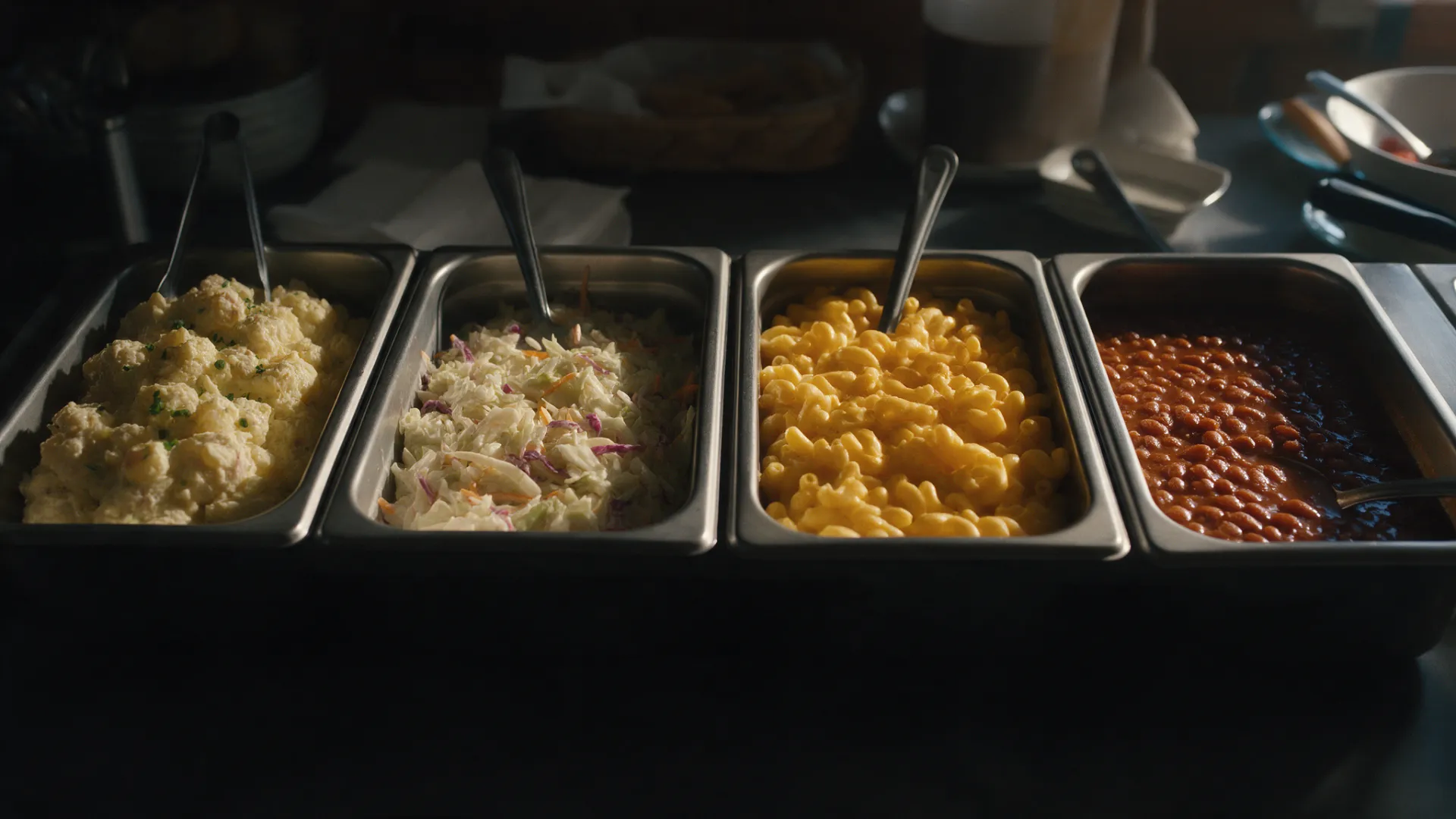 Sides that hold for a crowdwhich sides survive a two-hour service.
 BBQ for people who don't love smokewhat to ask for a guest who doesn't like smoke.
For the curious
The licensing rules are in the Food Act 2006 (Qld): s17 defines off-site catering, s48–49 make a catering business licensable, s86 requires a food safety supervisor, s94 sets out what a licence shows, and s99 requires the food safety program. The category-one rules are on the Queensland Government's Standard 3.2.2A page, and Rockhampton and Bundaberg councils explain the local process.
Temperatures come from FSANZ on transporting food and the 2-hour/4-hour rule, and allergens from FSANZ's allergen labelling page. Fire-ban rules are on QFD's can and can't page. Pricing rules are the ACCC's price displays and consumer guarantees.
If you're between Rockhampton and Bundaberg and would rather someone else stood at the pit for your next event, that's what I do. Get a rough price →