

How much meat per person for a BBQ party?
By Tim · 26 October 2026 · 7 min read · Last reviewed 28 October 2026
For a barbecue with sides, plan on 200g of cooked meat per person, counting adults. That's my own allowance, because no research sets one. Smoked brisket keeps about 60% of its trimmed raw weight, so 20 adults need 6.67 kg of trimmed brisket. Buy a heavier brisket than that, since the fat you cut off first isn't counted.
On this page · 9 sections
Well, it depends how hungry they are. But I'd bank on about 200g for everyone, though not everyone will eat that much and some more. It will all balance out in the end.
How much will each guest actually eat?
Nobody has measured it, and the guides that rank for this give a quarter to half a pound a head (113–227 g), mostly without saying raw or cooked. Australia's official serve of cooked lean red meat is 65 g, so my 200 g is about three of those (3.1, if you're counting).
The closest thing I have to a test is a birthday cook in February, one whole brisket (a packer) logged at 4.7 kg. The birthday cook fed 9 people and there was enough leftovers to make some meals afterwards. Though there were other proteins and sides. Nobody weighed what was left, either.
Working back from the plate
Start with the cooked weight. Multiply your guests by 200 g, then divide by the yield, the share of the trimmed raw weight still there when the brisket comes off the pit. For smoked brisket the research puts yield at about 55–63%, and 60% is a fair round number to plan with.
At 60%, 1 kg of trimmed brisket gives you about 600 g cooked, enough for three people at 200 g each. A finish around 90°C (194°F) and a three-hour hold both cost you meat, and if you do both, use the 55% column.
| Adults | Cooked brisket needed | Trimmed raw to buy @ 60% | Trimmed raw to buy @ 55% |
|---|---|---|---|
| 10 | 2.0 kg | 3.33 kg | 3.64 kg |
| 20 | 4.0 kg | 6.67 kg | 7.27 kg |
| 30 | 6.0 kg | 10.00 kg | 10.91 kg |
| 50 | 10.0 kg | 16.67 kg | 18.18 kg |
| 100 | 20.0 kg | 33.33 kg | 36.36 kg |
The knife takes its share before the pit does
A whole brisket loses weight twice, and the table only counts the second time. The knife comes first, taking the hard fat and thinning the fat cap, and then the cook takes close to 40% of what's left.
The knife's share hasn't been pinned down. All four university studies trimmed the surface fat to about 6 mm before they weighed a thing, and none reported how much came off, which varies with the brisket and with how hard you go.
You still have to buy enough brisket to cover the trimmings, because nobody eats them as meat, but on my cooks they don't go in the bin. I usually render the fat trimmings on the smoker all the way to the point of wrap. Then I pour the warm tallow over the brisket as I wrap in butcher paper.
I haven't weighed one of my own at all three points yet. My next packer goes on the scale as bought, trimmed and cooked, and the photo at the top of this page will be that one cook.
Does brisket really lose half its weight?
No. Measured, it loses close to 40% in the cook. Plenty of barbecue sites say half, and none of the ones we read traces it to a measurement. Four peer-reviewed studies from Texas A&M and Texas Tech (2017 to 2025) weighed smoked briskets before and after the cook, and at realistic finishing temperatures their yields landed between about 55% and 63%.
None of them was a backyard cook. Kerth used a commercial smokehouse, and Harris weighed a Texas restaurant's briskets off its oak-fired pit. Fletcher and Johnston both used pellet smokers. Johnston smoked Australian and American briskets side by side, and they lost about the same.
The half rule may come out roughly right if it quietly includes the fat you trim off first. On trimmed weight it over-buys. Thirty adults at 200 g need 6 kg cooked. At 50% you'd buy 12.0 kg of trimmed brisket and at 60% you'd buy 10.0 kg, so the half rule puts you 2 kg (20%) over.
Cooked yield, % of trimmed raw weight
- Harris 2017 · Restaurant pit, 85°C62.6%
- Johnston 2024 · Australian MSA, 93°C59.25–62.50%
- Johnston 2024 · Australian cull cow, 93°C54.9%
- Fletcher 2021 · Pellet smoker, 93°C59.7%
- Kerth 2025 · 85°C, 3 h hold59.2%
- Kerth 2025 · 90°C, 3 h hold55.7%
The lighter end of the Johnston bar is the spread across its eight Australian MSA groups.
| Study | How it was cooked | Cooked yield (% of trimmed raw) |
|---|---|---|
| Harris 2017 | Texas restaurant pit, oak, pulled near 85°C (185°F) | 62.6% |
| Johnston 2024 | Australian briskets, MSA-graded (company grades 2–5), to 93°C (199°F) | 59.25–62.50% |
| Johnston 2024 | Australian cull cow, same method | 54.9% |
| Fletcher 2021 | Pellet smoker, to 93°C (199°F) | 59.7% |
| Kerth 2025 | 85°C (185°F), then 3 h hold | 59.2% |
| Kerth 2025 | 90°C (194°F), then 3 h hold | 55.7% |
| The “half” rule | No source | 50% |
If you're cooking pork shoulder as well, smoked, pulled shoulder yield hasn't been measured in any published research we could find, and every number on this page is for brisket.
Choosing the brisket at the butcher
The brisket you buy has to weigh more than the table says, and the biggest one in the cabinet looks like the safe pick.
Bigger is better, I think that's the problem. But buying a decent quality brisket is better than a bigger one. I've sometimes bought one because it seemed to be the right size, but the fat cap had already been scalped and I learnt it's better to choose the fattier ones and trim it myself. Plus that gives me warm tallow for the wrap. You spend a bit more because the fat obviously weighs something, but overall it's worth it.
Before the butcher, and on the day
- Count the adults and find your row in the table. If you finish hot and hold the brisket for hours, read the 55% column.
- Buy a brisket heavier than that, with its fat cap still on, and trim it yourself. Until you've weighed your own trim, how much heavier is a guess, so lean heavy.
- Weigh it three times: in the bag, once it's trimmed, and whole after the rest. The bag weight minus the trimmed weight is your trim. The cooked weight divided by the trimmed weight is your yield on that cook, and after a few cooks you'll know whether 60% suits your pit.
- Render the trimmings on the smoker while the brisket cooks and pour the tallow over it when you wrap.
- On the day, put out what the crowd will get through in the next couple of hours and keep the rest out of the 5–60°C (41–140°F) danger zone until it's wanted.
Quick answers
How much brisket do I need per person?
About 200 g cooked for each adult when there are sides. Some eat less, some more, and it evens out. A kilo of trimmed brisket comes off the pit at about 600 g, three people's worth, so divide by 0.6 and allow extra for the fat you'll trim.
How much weight does brisket lose when you smoke it?
Close to 40% of its trimmed weight. Four university studies measured yields of about 55–63%, with a hot finish and a long hold at the low end. The fat you trim off before that is a separate loss, so against what you paid for, the cooked brisket is lighter still.
Is "per person" raw weight or cooked weight?
Plan in cooked weight, because that's what your guests eat, and work back to what you buy. Plenty of guides don't say which they mean, and with brisket the two are about 40% apart. Read a cooked figure as a raw one and the platter runs out early.
How long can barbecue sit out at a party?
Two hours, going by Queensland Health. Then eat it or get it in the fridge straight away, and after four hours out in total, throw it out. Food businesses work to a similar 2-hour/4-hour rule. The clock adds up every stretch the meat spends between 5°C (41°F) and 60°C (140°F).
Read next
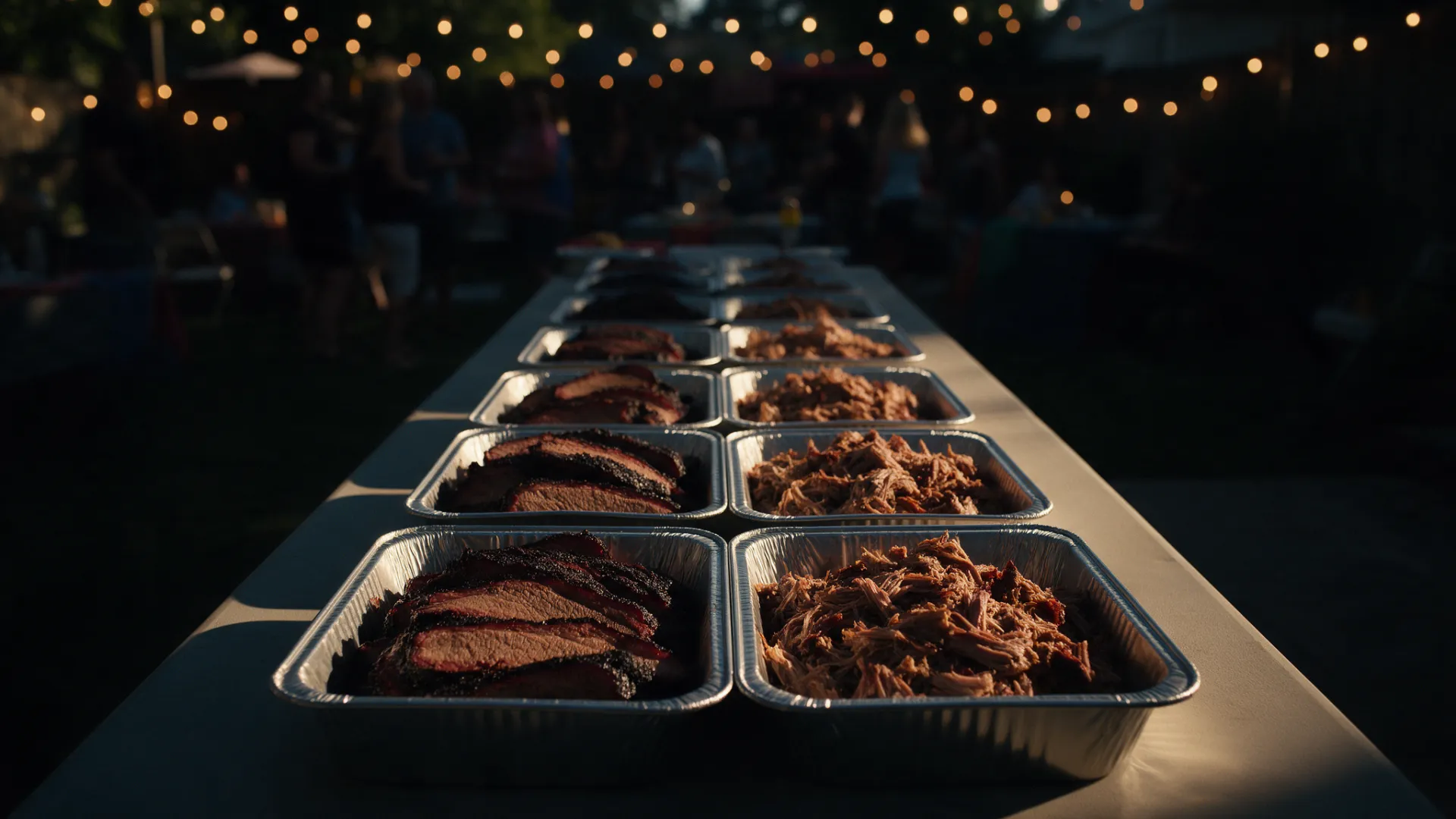 Hiring a BBQ caterer in central Queenslandwhat to ask a caterer once you know your numbers.
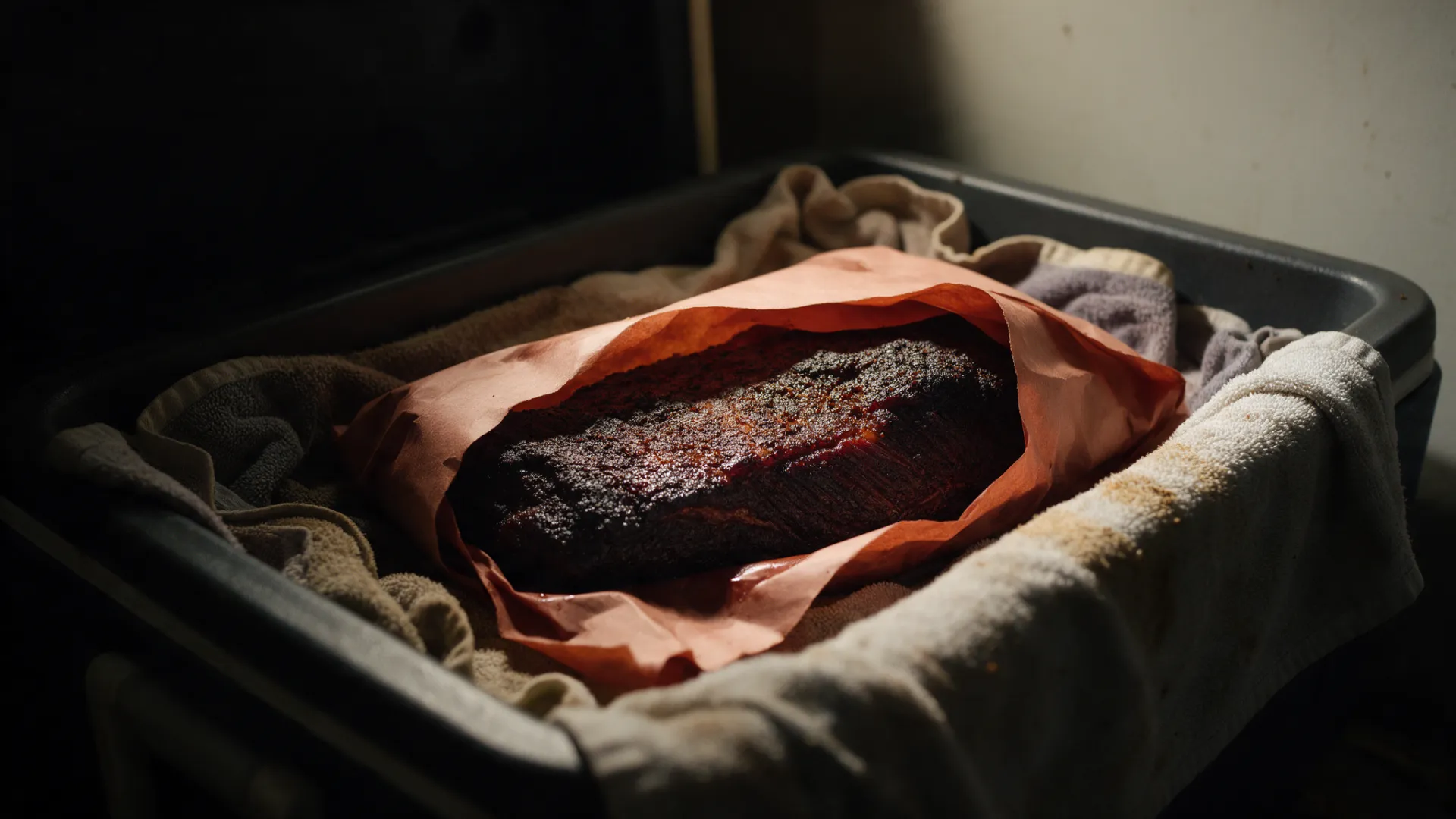 Resting and holding a brisketwhy a long hold leaves you with less meat.
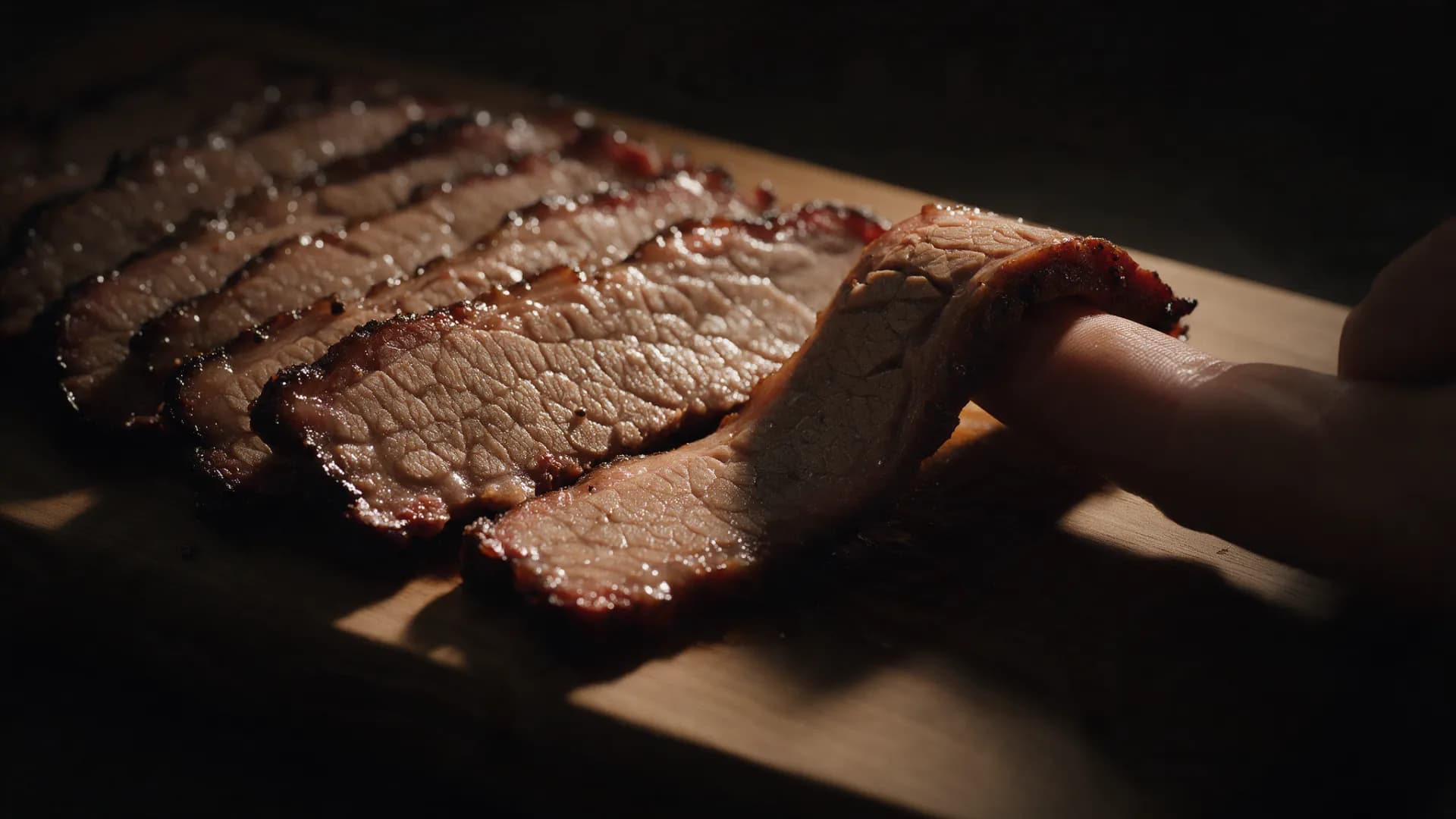 Why is my brisket dry?what the finishing temperature does to the slice.
For the curious
The researchers call the planning number cooking yield (cooked weight divided by trimmed raw weight) and its flip side cook loss. The biggest of the four studies is Kerth et al. 2025 at Texas A&M: 96 briskets, four finishing temperatures, and hot yield, meaning the weight straight after the hold. The Australian briskets are in Johnston et al. 2024 from Texas Tech. Harris et al. 2017 weighed 48 off a restaurant pit, and Fletcher's 2021 paper found grade made no difference to yield.
USDA's Table of Cooking Yields puts a braised brisket flat at 69%. The 65 g serve is from Eat for Health, and the 2-hour/4-hour rule is FSANZ's.
If you're between Rockhampton and Bundaberg and would rather someone else stood at the pit for your next event, that's what I do. Get a rough price →