A Carolina vinegar sauce for pulled pork
By Tim · 28 October 2026 · 7 min read
Eastern North Carolina vinegar sauce is cider vinegar, chilli flakes, black pepper and salt, rested a few hours and splashed into hot pulled pork. Per litre of vinegar that's 83 mL of chilli flakes, about 8 mL of pepper and 11–22 g of salt, depending on your salt. Weigh the salt. A little sugar is optional.
On this page · 9 sections
What makes it different from a barbecue sauce?
It's thin. It soaks into hot chopped or pulled pork and seasons every strand, so it works more like seasoning than a sauce you'd dip into. That's how eastern North Carolina does it: mix some into the meat while it's hot, then put more on the table. It's a bit like a squeeze of lemon on fish. You're waking the pork up.
The oldest version is mostly vinegar, red pepper and salt. NCpedia calls eastern style, whole hog with a cider vinegar and pepper sauce, "the simplest and eldest form" of the state's barbecue. I've used cider vinegar in a rib wrap, but I haven't made this sauce myself yet, so the recipe here comes straight from the books.
Eastern or Lexington?
North Carolina has two vinegar sauces. In the east it's whole hog, chopped, with the plain vinegar and pepper sauce. In the Piedmont, around Lexington, it's pork shoulders, and the sauce (they call it a dip) adds ketchup. The dip goes on at the table instead of being basted on, partly because tomato and sugar scorch on the pit. It comes with red slaw too.
The Lexington style is the younger one. John Shelton Reed and Dale Volberg Reed date it to about the First World War in their 2008 book Holy Smoke. The two styles have blurred since.
| Eastern | Lexington | |
|---|---|---|
| Where | Eastern North Carolina | The Piedmont, around Lexington |
| Meat | Whole hog, chopped | Pork shoulders |
| Sauce | Cider vinegar, red pepper and salt | The same vinegar base with ketchup added, called a dip |
| When it goes on | Into the hot meat, then more at the table | At the table, not basted on, partly because tomato and sugar scorch |
| Slaw | Not covered in our sources | Red slaw |
| Age | The eldest form, in NCpedia's words | Younger: about the First World War, by the Reeds' dating |
"Carolina" is two states as well. South Carolina's mustard sauce is a different thing again. This one's the North Carolina family.
Should there be sugar in it?
Purists say no. But when the Reeds did a quick, informal survey of eastern sauce recipes online, about two-thirds had some sweetener in them. So a bit of sugar is normal even in the east.
My suggestion is make it without first and taste it on the pork. If it's too sharp for your table, add sugar, about 26 g per litre to start. Two jars side by side, one with and one without, is the easy way to decide.
Why you have to weigh the salt
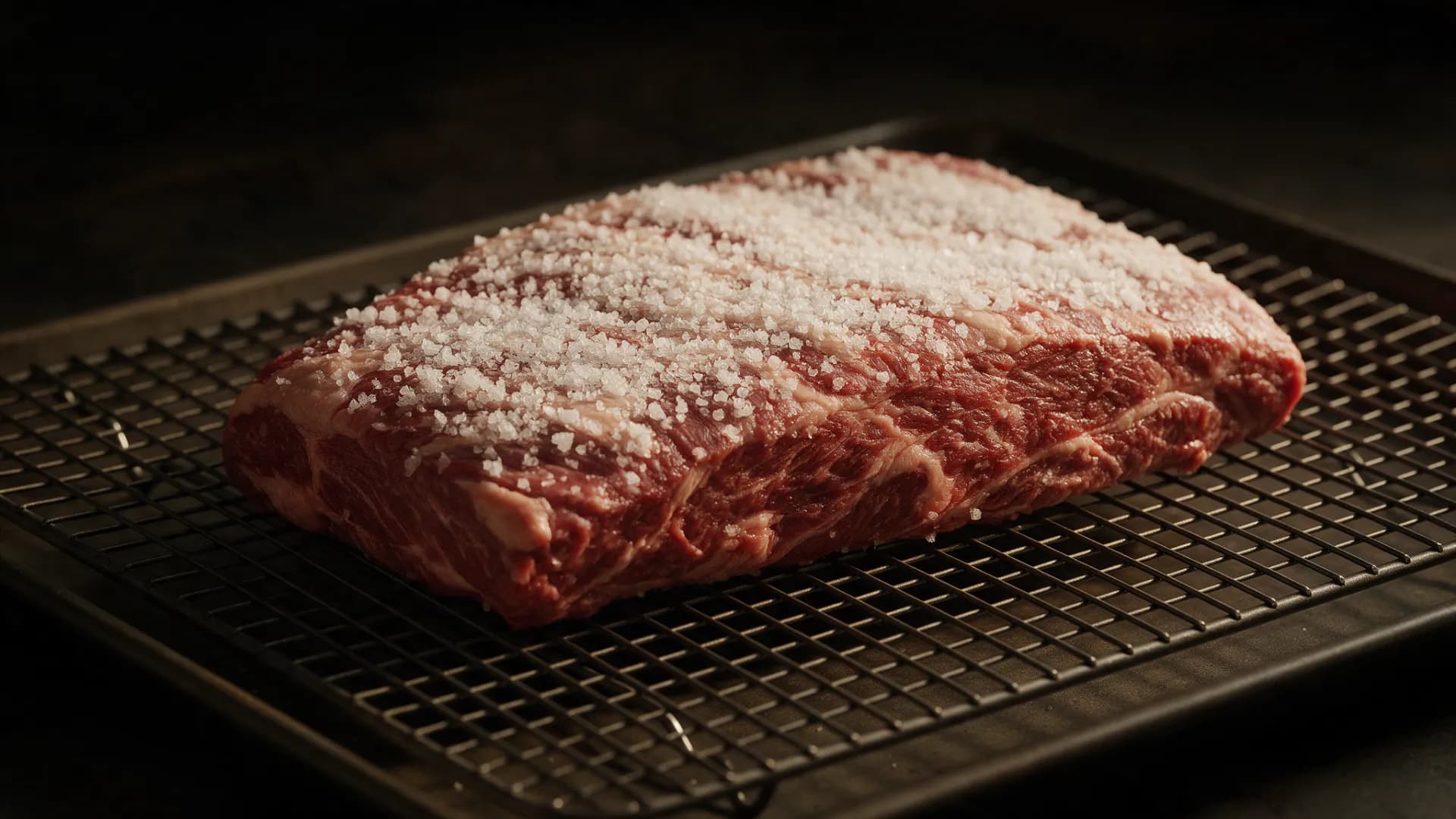
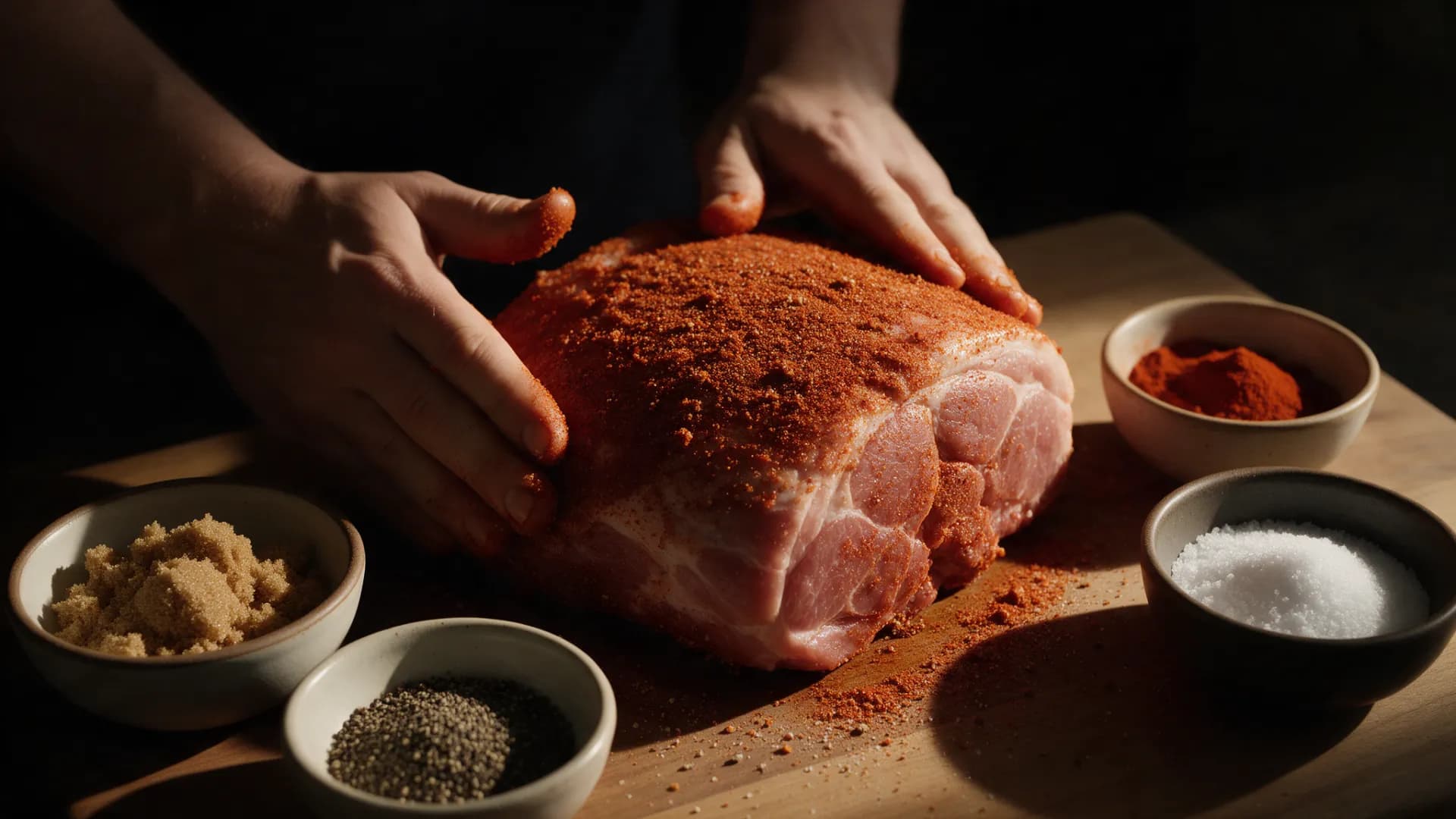
The salt is the part to get right. The traditional recipe the Reeds print, credited to the North Carolina Pork Council, is 1 US gallon of cider vinegar, 1⅓ cups of crushed red pepper, 2 tablespoons of black pepper and ¼ cup of salt. Scaled to a litre, the salt comes to about 16 mL.
But 16 mL of salt doesn't weigh the same from one salt to the next. Going by US brand weights, in fine table salt it's about 22 g, and in a coarse, flaky kosher salt it can be 11 g. Nobody's weighed the Australian salts for this, so weigh yours. Same recipe, twice the salt. Published versions are all over the place too:
Salt, grams per litre of liquid
- The old-time eastern sauce11–22 g
- Saveur (2011)22–32 g
- AmazingRibsabout 42 g
The lighter end of a bar is the difference the brand of salt makes on its own.
| Recipe | Salt per litre, roughly (US salt brands assumed) |
|---|---|
| The old-time eastern sauce | 11–22 g, depending on the salt |
| Saveur (2011) | 22–32 g, depending on the kosher salt |
| AmazingRibs | about 42 g, with Morton kosher |
So weigh it, and start low. You can always add salt to the meat. You can't take it back out (dry brining has more on why spoons don't work for salt).
Making it in Australia
Most of it is easy here. "Crushed red pepper" in US recipes is just chilli flakes. Australian vinegar has to be at least 4% acid by law, so any cider vinegar off the supermarket shelf will do.
The trap is spoons. If you're converting a US recipe, US tablespoons are smaller than ours, so measuring with Australian spoons over-salts it before you even get to the type of salt. That's why the card is in grams and millilitres.
How to use it on pulled pork
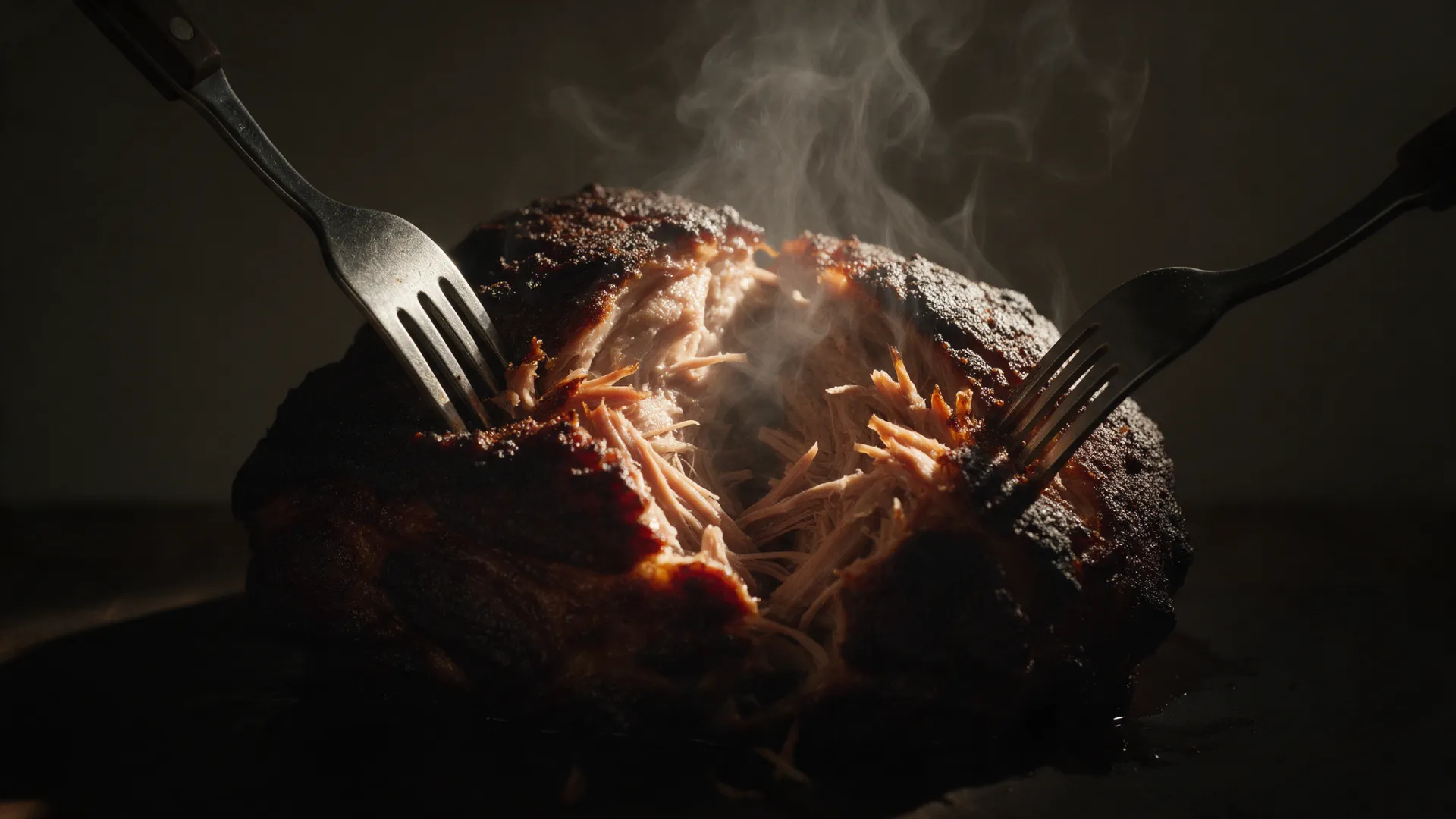
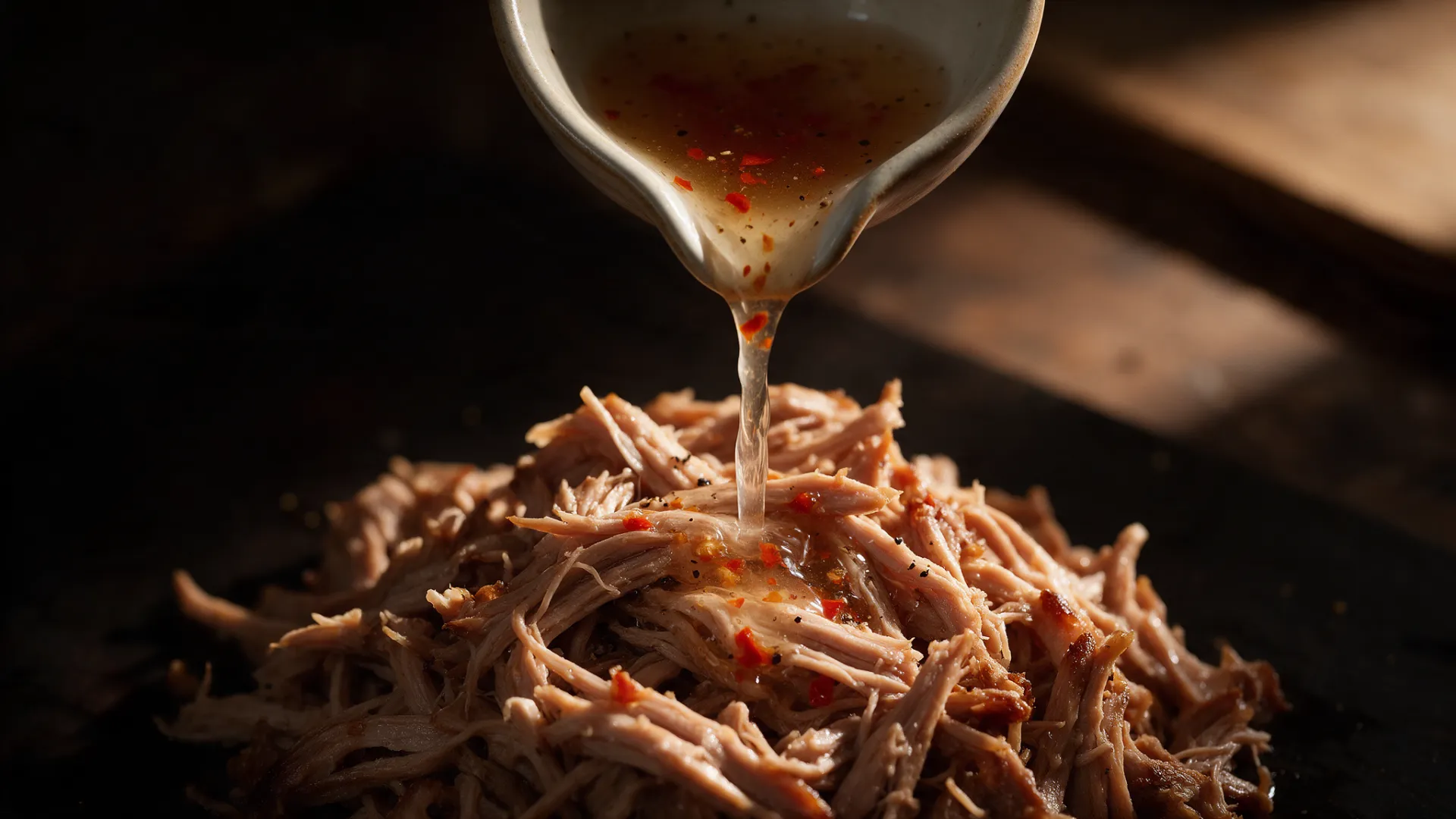
Pull or chop the pork, then splash the sauce in while the meat is still hot so it soaks in. Toss it, taste a bit and add more until it tastes seasoned. Then put the jar on the table for anyone who wants more. There's no set amount per kilo. It's a taste thing.
It's also a good one for a mixed table. People who find smoked pork too much can add vinegar to cut through it, and people who don't, don't (BBQ for people who don't love smoke). Which shoulder to buy and how to keep it hot is in pulled pork in Australia.
Quick answers
Does Carolina vinegar sauce have sugar in it?
Often, yes. Purists say a true eastern North Carolina sauce is just vinegar, red pepper, salt and black pepper. But in one informal survey of eastern recipes about two-thirds included some sweetener, so a little sugar is normal. The Lexington-style dip adds ketchup as well, so it's a little sweeter again.
What's the difference between eastern and Lexington barbecue sauce?
Tomato. Eastern North Carolina sauce is vinegar, red pepper and salt, used on whole hog. Lexington, or Piedmont, dip starts from the same vinegar base and adds ketchup, so it's redder and a little sweeter, and it's served with pork shoulder and red slaw. Both are thin and tangy, nothing like a thick American barbecue sauce.
When do you put vinegar sauce on pulled pork?
Right after you pull or chop it, while the meat is hot, so the sauce soaks in. Toss in a few splashes, taste, add more, and put the rest on the table. If the pork has to wait for a crowd, keep it covered at 60°C or hotter, or it's on the 4-hour clock.
How long does vinegar barbecue sauce keep?
Weeks, in a sealed jar in the fridge. Aaron Franklin's book says up to a month for his vinegar sauce, which is a safe line to go by. Any sauce that's been used to mop raw or part-cooked meat, or been touched by a brush that's been on raw meat, gets thrown out. Only keep sauce that went straight from the jar to the table.
For the curious
The eastern and Lexington styles are described in Wynne Dough's NCpedia entry on barbecue, from the Encyclopedia of North Carolina (2006). The recipe survey, the old-time recipe and the date for the Lexington dip are from John Shelton Reed and Dale Volberg Reed with William McKinney, Holy Smoke (UNC Press, 2008), read as search snippets. Cook's Country's 2022 piece covers how the styles have blurred. The salt weights per teaspoon are from J. Kenji López-Alt's The Food Lab (2015). The other recipes compared are Saveur's eastern sauce and AmazingRibs'. Franklin's "non-Carolina" vinegar sauce, and its month in the fridge, are in Franklin Barbecue (Franklin and Mackay, 2015). The 4% acetic acid minimum is FSANZ Standard 2.10.1. The food-safety numbers follow FSANZ and Food Safety Information Council guidance, checked 26 October 2026.
If you're between Rockhampton and Bundaberg and would rather someone else looked after the pit at your next event, that's what I do. Get a rough price →