
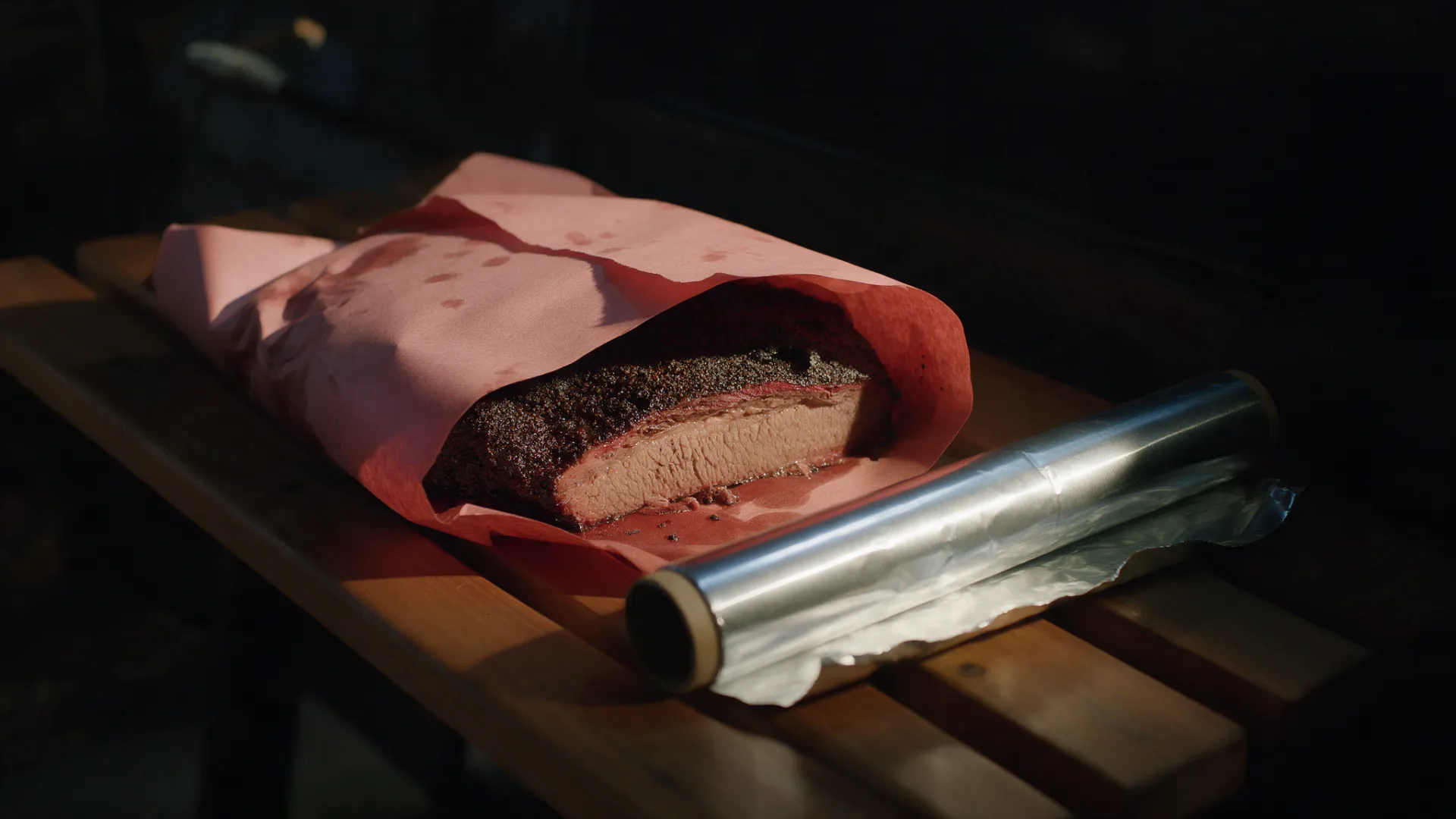
Butcher paper vs foil vs naked: what wrapping actually does
By Tim · 27 October 2026 · 10 min read · Last reviewed 28 October 2026
A wrap decides whether the outside of your brisket dries or braises. Foil traps the steam, so the meat braises at about 100°C: no stall, the fastest finish and the softest bark. No wrap lets it dry. Butcher paper sits in between but much nearer no wrap, while baking paper behaves more like foil.
On this page · 11 sections
No wrap
77°C
170°F
drying
Butcher paper
86–88°C
187–190°F
mostly drying
Baking paper
about 100°C
213°F
braising
Foil
about 100°C
213°F
braising
77°C
No wrap
86–88°C
Butcher paper
about 100°C
Baking paper, foil
Amber: water vapour getting out. Dashed: butcher paper. Dotted: baking paper. Solid: foil.
What does wrapping a brisket actually do?
A wrap controls the sweat. An unwrapped brisket has water coming to the surface and evaporating off it, which cools the surface and dries it out. That's what causes the stall (why your brisket stops climbing) and it's also what lets bark form (what bark actually is).
Once you wrap, the question is how much of that sweat can still get out. Think of a saucepan. Lid off, it reduces and catches. Lid on, everything simmers in its own steam. Foil is the lid on and no wrap is the lid off. Butcher paper is the lid sitting ajar, and it's ajar a fair bit more than most people think.
How much steam each wrap lets out
Greg Blonder measured it in 2011. He sealed different wraps over a bath of water, put it in a 121°C (250°F) oven and logged what the water settled at.
| Wrap | Water settled at |
|---|---|
| Nothing | 77°C (170°F) |
| One layer of kraft (butcher-type) paper | 86°C (187°F) |
| Two layers of kraft paper | 88°C (190°F) |
| Baking paper (parchment) | about 100°C (213°F) |
| Foil | about 100°C (213°F) |
The more vapour a wrap lets out, the cooler the water stayed. So paper only lifted it about 9–11°C over no wrap, whereas foil lifted it about 24°C. It's water and not meat, and it's one test, but it's the clearest measurement there is. No published study has put foil, paper and no wrap side by side on brisket.
Foil braises, so it's the fastest
Inside sealed foil nothing escapes, so the brisket sits in its own steam and juice at about boiling. It doesn't get any hotter than that, whatever the pit's doing. That's a braise.
It's quick. In another of Blonder's tests three 2.7 kg (6 lb) brisket points were smoked to 66°C (150°F), then the foiled ones finished almost four hours before the one left naked. The Modernist Cuisine team vacuum-sealed one brisket and left its twin open, and the sealed one never stalled at all.
The catch is a leak. Blonder found a leak of about 6.5 cm² (1 sq in) in total let enough steam out to drop the stall by about 11°C (20°F), so a loose wrap or a probe hole torn wide starts letting steam out and the cook slows. If you're using foil, wrap it tight with the seam up and use heavy-duty so the bones and bark don't poke through.
Foil also blocks a wireless probe. On my mutton leg in August I sealed it in a foil tray with stock and the probe signal dropped about 25 dB the moment the foil went on. Paper doesn't block the signal the same way. Foil is fine to cook in, and FSANZ says Australians' aluminium intake is within safe levels. Acid and salt make foil give up more aluminium though, so if you splash vinegar or juice into a foil wrap, keep it small.
The briskets cooked for research studies get wrapped in foil, including Australian ones in two 2024 studies, wrapped at 63–66°C (145–151°F) on smokers running 120–121°C (248–250°F).
Butcher paper sits closer to no wrap
Paper slows the sweat without stopping it, so the surface keeps drying a bit and the bark holds up better. Aaron Franklin calls it "a blend of using foil and not wrapping at all". By Blonder's numbers the blend leans well towards no wrap. Nobody has timed paper against foil on meat, so I can't give you a number for how much time it saves.
On my 26 July 2026 brisket the lean was actually falling when I wrapped it in butcher paper with my own tallow, because the pit had sagged mid-stall. For the next 70 minutes it climbed at about 12°C (22°F) an hour, though my reading at the wrap was taken straight after handling it. A few other things happened at the same moment, the fire got fixed among them, so that's one cook.
Not every paper will do. For smoking you want plain paper with no wax and no plastic coating, the kind sold for barbecue (often pink or peach). Check the box. Blonder wrote back in 2011 that a lot of ordinary butcher paper isn't made for high heat and can add an off flavour, which is a good reason to buy paper made for this job. Freezer paper has a plastic coating that its maker says melts in an oven, and wax paper isn't made for oven heat either. There's no Australian standard for barbecue paper, just the general rule that anything touching food has to be fit for that use.
Is baking paper the same as butcher paper?
No. Baking paper is coated with silicone, which is what makes it non-stick, and in Blonder's test it held the water at about 100°C, same as foil. So by the numbers it should braise like foil. One major Australian brand is rated to 240°C (464°F), far above smoker temperatures, but check your box and keep it away from flame.
The funny thing is my first logged brisket, back in July 2025, was wrapped in baking paper with tallow, and it scored 5 out of 5 for tenderness and moisture. It was also the slowest wrapped phase of the three cooks I have numbers for.
| Cook | Wrap | Internal at wrap | Wrapped for | Average climb while wrapped |
|---|---|---|---|---|
| July 2025 brisket flat | Baking paper and tallow | about 71°C (160°F) | 4 h 00 | about 5.5°C (9.9°F) an hour |
| 26 July 2026 brisket | Butcher paper and tallow | 64°C (147°F), lean | 2 h 38 | about 11.4°C (20.6°F) an hour |
| 8 August 2026 mutton leg | Sealed foil tray with stock | 53.5°C (128°F) | 2 h 01 | about 17.7°C (31.9°F) an hour |
Those are three different cooks with different meat, pit temperatures and timing, so it's no test of the wraps. The baking paper one was wrapped later, at about 71°C (160°F), when the stall was close to breaking. I didn't record what the pit thermometer was, and a folded wrap may leak at the seams where Blonder's sheet was clamped down. So I can't tell you from one cook whether it behaved like foil. The way to find out is a split test, one flat cut in half, one half in each wrap, same pit.
Does foil make brisket juicier?
Not as much as you'd think. Blonder puts it at about a third of a trimmed brisket's weight lost whether it's wrapped or not, and the foil-wrapped briskets in those research studies still lost roughly 38–44%. What the wrap changes is where the juice ends up. In foil it collects in the wrap instead of going up the chimney.
So don't throw it out. That liquid is rendered fat, gelatin and rub, so pour whatever's pooled in the wrap back over the slices.
I usually render the fat trimmings on the smoker all the way to the point of wrap. Then I pour the warm tallow over the brisket as I wrap in butcher paper. Adding tallow to the wrap is a habit I picked up watching Texas BBQ pitmasters explain to add tallow for extra juiciness. Maybe it works maybe it doesn't but I just always add it.
When should you wrap?
When the bark's set. Cooks don't agree on whether that's during the stall or after it. Franklin says don't wrap during the stall, wait till it's through. AmazingRibs says wrap when it starts. I wrapped mid-stall on my 26 July 2026 brisket. The thing they all come back to is the bark, so go by touch. If the rub won't smear on your finger, it's ready. If it's still tacky, a wet wrap will take it off with it.
Once it's wrapped, no more smoke gets onto the meat and the bark stops building. If it's gone soft at the end, a short spell unwrapped in the pit firms it back up.
At your pit next time
- Decide what you want first. Foil if you're short on time or the brisket's lean, paper if you want to keep more bark, no wrap if you've got all day.
- Wrap once the bark is set, whatever the probe says.
- Use plain, uncoated paper sold for smoking. Leave freezer paper and wax paper in the drawer.
- If you use baking paper, expect it to behave more like foil, going by the one test there is.
- Wrap tight with the seam up, and don't keep stabbing it with the probe.
- Unwrap over a tray with a rim and pour the juice back over the sliced meat.
Quick answers
Can I use baking paper instead of butcher paper?
You can, but expect it to behave more like foil than butcher paper. Baking paper is coated with silicone, and in one measured test water sealed under baking paper in a 121°C oven reached about 100°C, the same as under foil, while under kraft paper it stayed near 86°C. So it traps more steam, speeds the cook and softens the bark more. Most are rated well above smoker temperatures, but check the box and keep it off flame.
Can I wrap brisket in freezer paper or wax paper?
No. Freezer paper has a plastic coating on one side, and its maker says it shouldn't go in an oven because the coating melts. Wax paper isn't made for oven heat either. For smoking, use plain, uncoated paper sold for cooking or barbecue (often pink or peach), and check the box says it's made for food and has no wax.
Does wrapping in foil make brisket juicier?
Not as much as people think. A brisket loses a lot of water either way. One experimenter puts it at about a third of the trimmed weight wrapped or not, and briskets wrapped in foil for research studies still lost around 40%. What foil changes is where the juice ends up, in the wrap rather than in the air. Pour that liquid back over the sliced meat and you get most of the benefit.
Does butcher paper cook faster than no wrap?
A little, but nowhere near as much as foil. Paper lets some of the brisket's sweat escape, so it only partly blocks the cooling that causes the stall. In one test, water under butcher-type paper held about 9–11°C warmer than uncovered water, and under foil it was about 24°C warmer. Foil-wrapped brisket points finished almost four hours before an unwrapped one. Nobody has timed paper the same way.
Do you have to wrap a brisket at all?
No. Wrapping is a choice about speed and bark. Left unwrapped, a brisket keeps drying, so the bark gets darker and firmer and the stall lasts longer, and a lean flat can dry out. Wrapped, it braises, which means a faster cook, softer bark and juice collecting in the wrap. Franklin wraps brisket in paper but doesn't wrap beef ribs, and the researchers who cook briskets for studies wrap in foil.
For the curious
How easily water vapour gets through a material is its vapour permeability, and the wraps sit on a scale from bare meat (all of it escapes) to foil (none). A sealed foil wrap is a braise, and the trick of foiling to beat the stall is called the Texas crutch.
Blonder's water test is on his foiling and basting page, and the leaks, gaps and foiled brisket points are on his Texas crutch page. The sealed brisket is on Modernist Cuisine. The foil-wrapped research briskets are Lees et al. 2024, Johnston et al. 2024 and Fletcher et al. 2021. Franklin's wrapping advice is in Franklin Barbecue: A Meat-Smoking Manifesto (2015). The packaging rule is FSANZ's chemicals in food packaging page, and Germany's food-safety agency explains the acid and foil point.
Read next
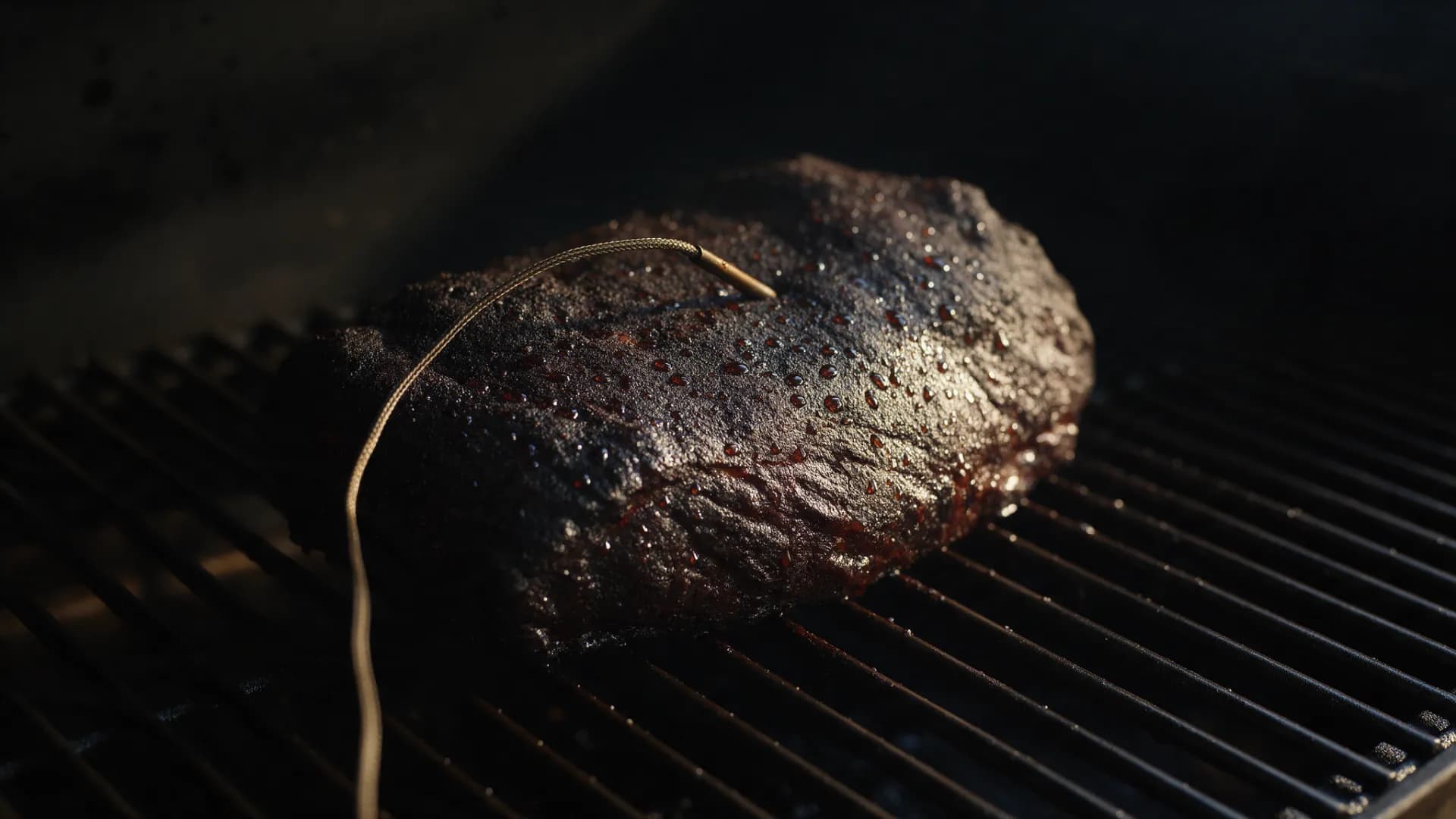 Why your brisket stops climbingthe sweat a wrap is controlling.
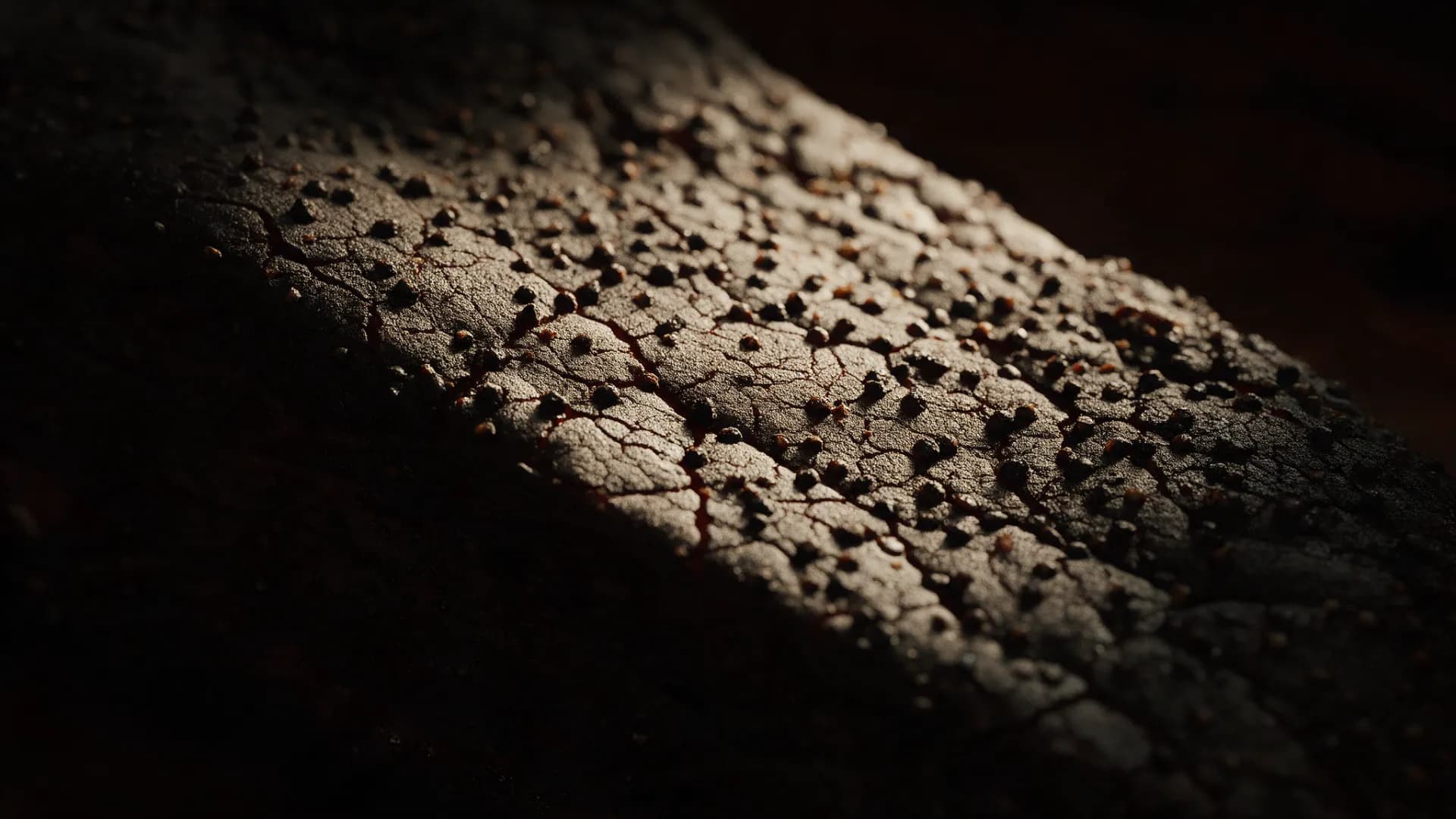 What bark actually iswhy a wet wrap softens it.
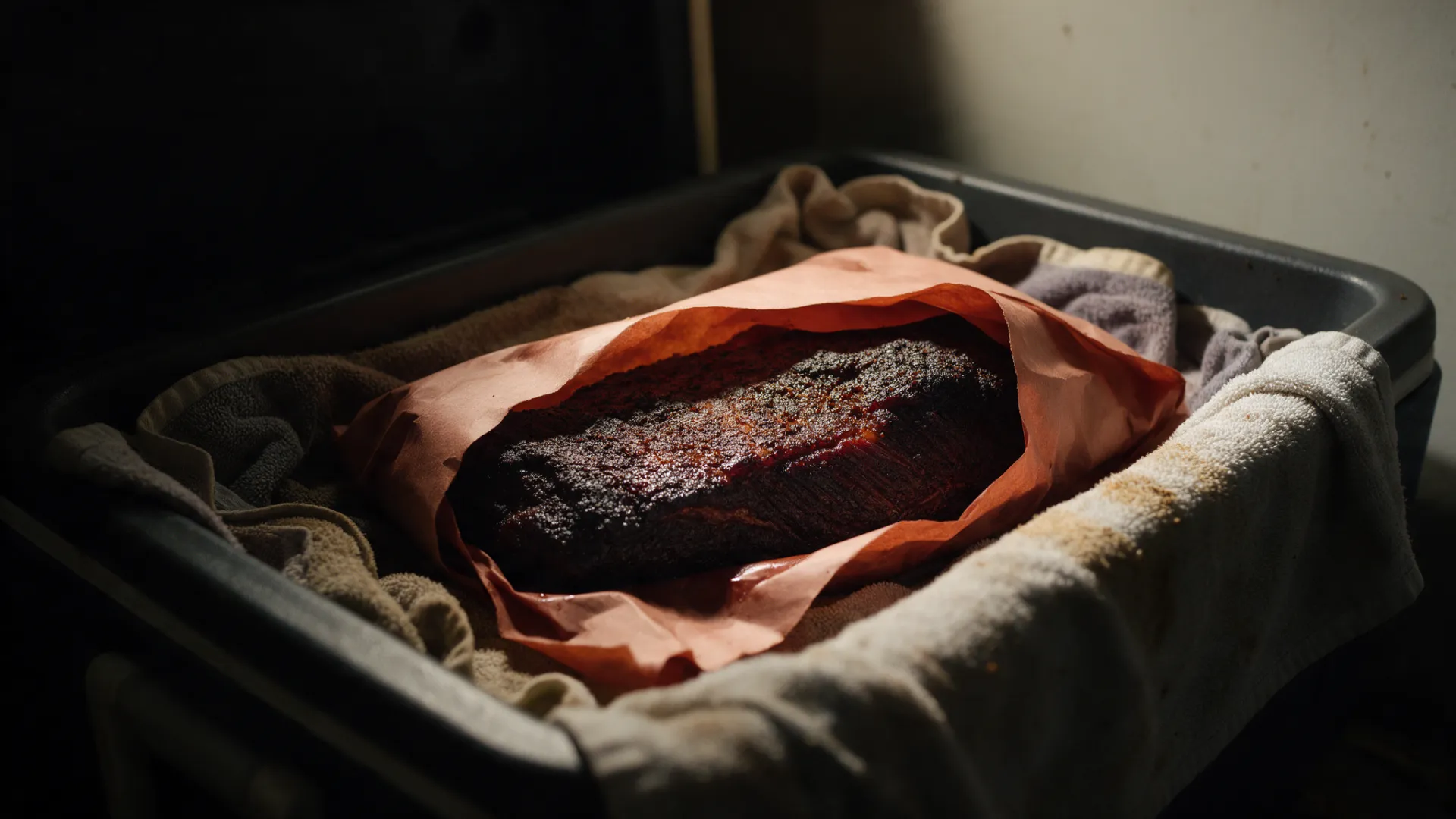 Resting and holding a brisketwhat to do once it's off, still wrapped.
If you're between Rockhampton and Bundaberg and would rather someone else stood at the pit for your next event, that's what I do. Get a rough price →