
Fat: rendering, trimming, and fat side up or down
By Tim · 28 October 2026 · 10 min read
The fat cap doesn't baste the meat, and it barely insulates it. What it does is stop that side sweating, so the meat under it runs hotter. Trim it to about 6 mm (a quarter-inch) so it renders and salt and smoke get near the meat. Face it toward your cooker's stronger heat. The fat that keeps brisket juicy is the marbling inside.
On this page · 12 sections
- Amber: On the bare meat, juices move outward and evaporate, so that side cools itself.
- Red dashed line: Under the cap nothing evaporates. In one experiment the meat there ran about 11°C (20°F) warmer in the stall.
- Red drops: Melted fat runs over the edge and drips off. It doesn’t soak in.
- Ink arrows: Salt and smoke stop at the fat.
Slows the heat about the same
6 mm of fat
about 12 mm of raw meat
Fat conducts heat about half as well as raw lean meat, so a 6 mm cap is like an extra centimetre of meat in the way. The gap closes as the meat dries.
Where the fat is on a brisket
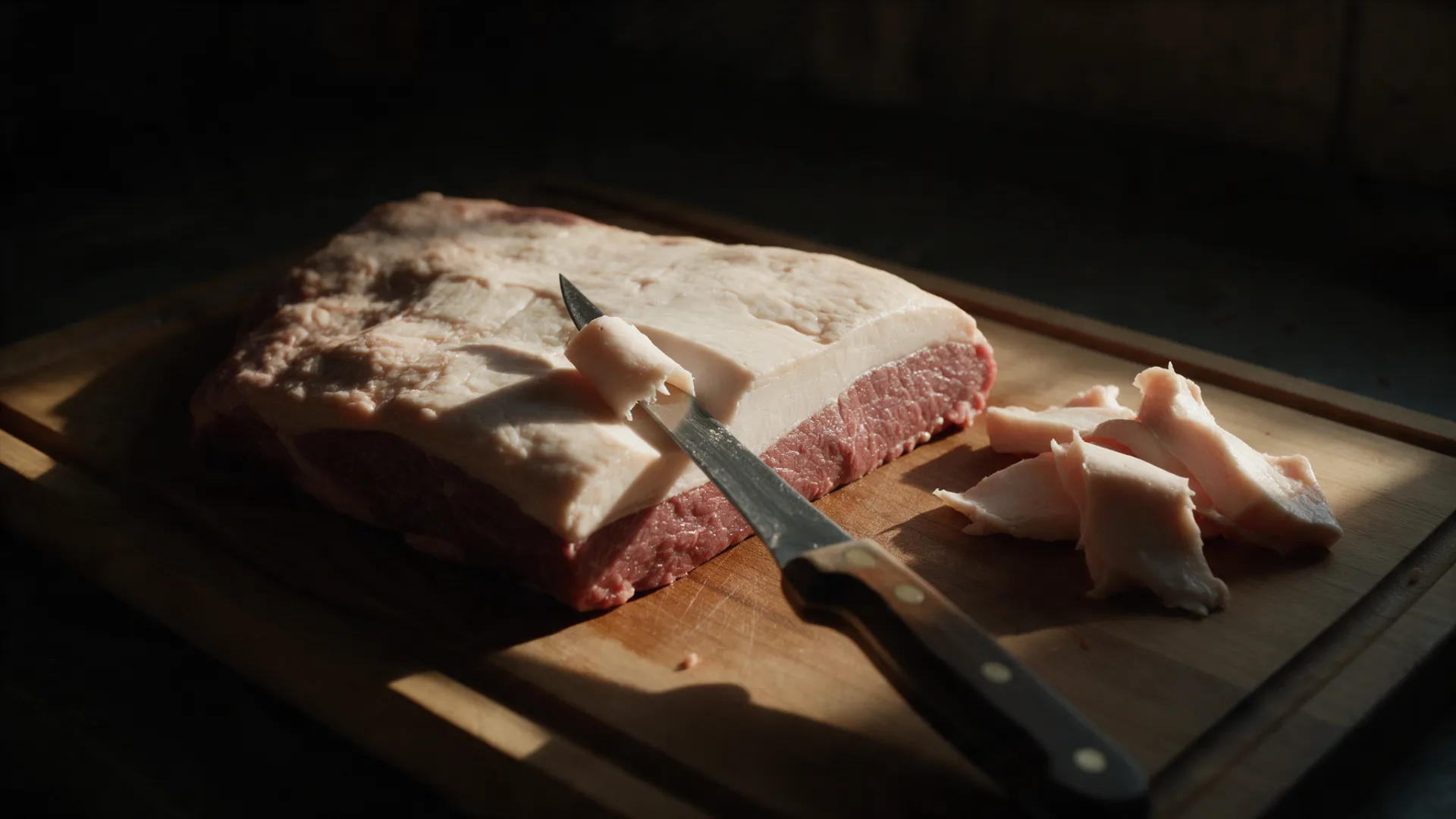
A brisket carries fat in three places. There's the cap on the outside, the hard seam of fat between the two muscles (the deckle), and the marbling inside the meat. You can trim the first two. You can't trim the third, and it's the one that matters most.
The two muscles are the point, which is the fattier top muscle, and the flat. In Australia a "brisket point end" usually means the whole thing, both muscles, so check with your butcher what you're getting.
Does the fat cap baste the meat?
No. A lot of people say the fat renders down and bastes the meat, but it doesn't work that way. Melted fat and the meat's watery juices don't mix, and those juices are moving outward from the middle the whole cook. So the fat runs over the surface and drips off.
Greg Blonder measured it in 2013 with a drip rig. With the cap on or off, a brisket lost about the same total weight, and the difference was smaller than the difference between one brisket and the next. Tony Mata, a meat scientist at Oklahoma State, says the same, that the fat won't move into the muscle while it cooks.
Some fat does end up back in the meat, but later. In the wrap and the rest the meat soaks up a little of the juice and fat around it, perhaps 5% of its cooked weight in Blonder's estimate. Which is the case for tallow in the wrap, if there is one.
I usually render the fat trimmings on the smoker all the way to the point of wrap. Then I pour the warm tallow over the brisket as I wrap in butcher paper. It's a habit I picked up watching Texas BBQ pitmasters explain to add tallow for extra juiciness. Maybe it works maybe it doesn't but I just always add it.
Does the fat cap protect the meat from heat?
Only a little. Fat conducts heat about half as well as raw lean meat. So a 6 mm cap slows the heat roughly like an extra centimetre of meat in the way, which isn't much on a brisket that's several centimetres thick. And the gap closes as the meat dries out during the cook.
The bigger effect goes the other way. Meat cools itself by sweating, the same evaporation that causes the stall. Fat doesn't sweat. So the meat under the cap can't cool itself, and it runs hotter. In Blonder's test the meat just under a cap about 1 cm thick was about 11°C (20°F) hotter during the stall than the trimmed side, and that was true cap up or cap down. Harold McGee writes that a layer of fat or oil on the surface can cut cooking time by about a fifth for the same reason.
Think of the cap as a raincoat. It barely changes how warm you are, but you can't sweat through it.
You can see it on a cook. On my 2.1 kg brisket this July the lean muscle (the flat) kept losing heat when the pit dropped, while the fattier point kept climbing. The lean holds more water and less fat, so it evaporates harder. That's one cook, but it's the same thing the research describes.
What a thick cap costs you
The meat under a thick cap misses out on three things. Salt barely gets through fat, so it's under-seasoned unless you trim it or inject (dry brining). Fat blocks the smoke ring under it, and most of the smoke that lands on the fat stays in the fat, which gets trimmed or left on the plate (the smoke ring). And fat makes no bark. Bark is dried protein and rub, and pure fat has no protein in it (what bark actually is).
Dripping fat can also wash some rub and smoke off the sides below it.
Why the fat stays rubbery
Rendering means melting the fat out of the fat tissue. The fat itself softens early. Blonder saw beef fat start dripping at about 46°C (115°F). But getting it out takes heat, time and the tissue around it giving way.
It's slower than you'd think. Blonder cooked a 1.8 kg lump of beef trimmings until it reached 85°C (185°F), after nine hours, and about two-thirds of it was still solid. So a thick cap never fully renders on a smoker. It stays soft, pale and rubbery, where a thin even layer renders and crisps.
You'll see figures like "fat renders at 54–60°C" around, and I've had that in my own notes. I couldn't find where it comes from. Fat melts over a range, and there's no single rendering temperature to aim for.
Dry heat on the outside is what renders the cap. On my 2.1 kg brisket this July I'd planned to hold off wrapping until the point hit 74°C, to give the fat cap more time unwrapped, because inside the wrap the surface is basically braising. In the end the pit sagged and the lean was falling, so I wrapped earlier, with the point at 70.4°C. On my first baseline brisket in July 2025 I'd trimmed the cap to 6 mm, and at 91°C the top fat was soft and oozy while the meat was still a little tough. The fat was ready before the meat was.
Juiciness, consumer score out of 100, with each muscle’s fat
Select
Flat54 · 3.6% fatPoint66 · 6.6% fatChoice
Flat56 · 4.9% fatPoint66 · 7.6% fatPrime
Flat61 · 7.7% fatPoint66 · 14.7% fat
Every bar is drawn on the same 0–100 scale. US grades, from leanest (Select) to most marbled (Prime).
The fat that keeps brisket juicy is inside
When fat melts inside the meat it keeps the bite moist, because it melts where the fibres would dry and stiffen and it lubricates them. Lean meat with not much fat eats dry and compacted even when it's tender. That's marbling, and it's why the point eats juicier than the flat.
In a 2021 Texas Tech study (Fletcher and colleagues), 360 consumers scored smoked brisket. The point scored about 66 out of 100 for juiciness in every grade. The flat scored 54 to 61, and it got juicier as its marbling went up. The flat was 4–8% fat and the point 7–15%. Which is why a lean flat is the hard one to get right (why is my brisket dry?).
There's an Australian study too. Johnston and colleagues smoked Australian grass-fed and grain-fed briskets in 2024, and consumers couldn't reliably tell them apart on juiciness or tenderness.
How much fat should you trim?
About 6 mm. That's the quarter-inch everyone quotes, and it's what the meat scientists trim to as well. The Fletcher, Johnston and Kerth brisket studies all took the outside fat down to 6 mm and took off the hard fat. My own trim target is the same.
Nobody has tested 6 mm against 3 mm or 12 mm on a smoked brisket though. It's a sensible number. Thin enough to render and let salt and smoke near the meat, thick enough to look after the thin edges. Blonder trims it all off and still gets good results.
Trim for shape as much as fat. Smooth and even, no thin flaps or loose bits that'll dry out and burn, and shave down the hard fat that won't render. Trim it cold from the fridge because firm fat cuts cleanly.
I check depth by feel first. Where I can't tell, I make a small cut to see how deep the fat goes, and on hard fat I shave rather than slice. It leaves little cuts, which is fine on fat but not on the lean.
When buying I've sometimes bought one because it seemed to be the right size, but the fat cap had already been scalped and I learnt it's better to choose the fattier ones and trim it myself. Plus that gives me warm tallow for the wrap. You spend a bit more because the fat obviously weighs something, but overall it's worth it.
Fat side up or fat side down?
Which way up depends on your cooker. Blonder got opposite answers on two different cookers, so there's no universal right way up.
The rule that works is to put the fat toward the stronger heat. That way the cap gets the heat it needs to render and the lean side isn't overdone. Aaron Franklin cooks fat up, "because I have more top heat than bottom heat" (2015), and he'd go fat down if his pits were the other way. On cookers heated from below, like kettles, bullets and a lot of pellet grills, that usually means fat down. On some offsets it means up. One of the meat-science studies, Johnston's on Australian beef, cooked fat side down at 121°C (250°F).
To know which yours is, measure the grate. Get the pit steady, put one probe just above the grate and one just below it where the meat sits, and compare them once they settle. Whichever side reads hotter is where the fat goes.
I haven't settled it on my Hark yet. My own notes have it both ways.
One more thing on an offset. Point the thick, fatty point end toward the hotter end of the chamber. Its fat and its size handle the heat better than the thin end of the flat.
At your pit next time
- Buy a brisket with a decent fat cap and trim it yourself, cold.
- Take the cap down to about 6 mm, smooth and even, and take out the hard deckle fat.
- Render the trimmings into tallow on the smoker if you want it for the wrap.
- Measure your grate, above and below, and face the fat toward the hotter side.
- Point the point toward the hot end on an offset.
- Give the cap time unwrapped so it can render.
Quick answers
Should brisket go fat side up or fat side down?
Put the fat toward the stronger heat. The cap doesn't baste the meat either way, so the real question is which side needs the fat to render and which side would otherwise overcook. On cookers heated from below, that usually means fat down. On pits with more heat above the grate it means fat up, which is what Aaron Franklin does. If you're not sure, put a probe just above and just below the grate and compare.
Does the fat cap melt into the meat and keep it moist?
No. Melted fat and the meat's watery juices don't mix, and those juices flow outward during cooking, so fat runs over the surface and drips off. In Blonder's measurements, with the cap on or off, a brisket lost about the same weight. The fat that does keep brisket moist is the marbling inside the meat, which is why the point eats juicier than the flat.
How much fat should I trim off a brisket?
Most cooks, and the meat scientists who study brisket, trim the outside fat to about 6 mm (a quarter-inch) and remove the hard fat between the two muscles. Thin, even fat renders and lets salt and smoke reach the meat, while thick fat stays rubbery and blocks them. No study has compared other thicknesses, so treat 6 mm as a sound starting point.
Does the fat cap protect the brisket from heat?
Only a little. Fat conducts heat about half as well as lean meat, so a 6 mm cap is like adding about a centimetre of meat. Its bigger effect is that it stops evaporation, and evaporation is what cools meat in a smoker. In one experiment, meat under the fat cap ran about 11°C (20°F) hotter during the stall than the trimmed side.
Why is the fat on my brisket still rubbery?
Usually because it was left too thick or didn't get enough dry heat before wrapping. Fat starts to soften early, but getting it out of the tissue is slow. In one test, a lump of beef fat that took nine hours to reach 85°C (185°F) was still two-thirds solid. Trim to a thin, even layer, face it toward the heat, and give it time unwrapped.
Read next
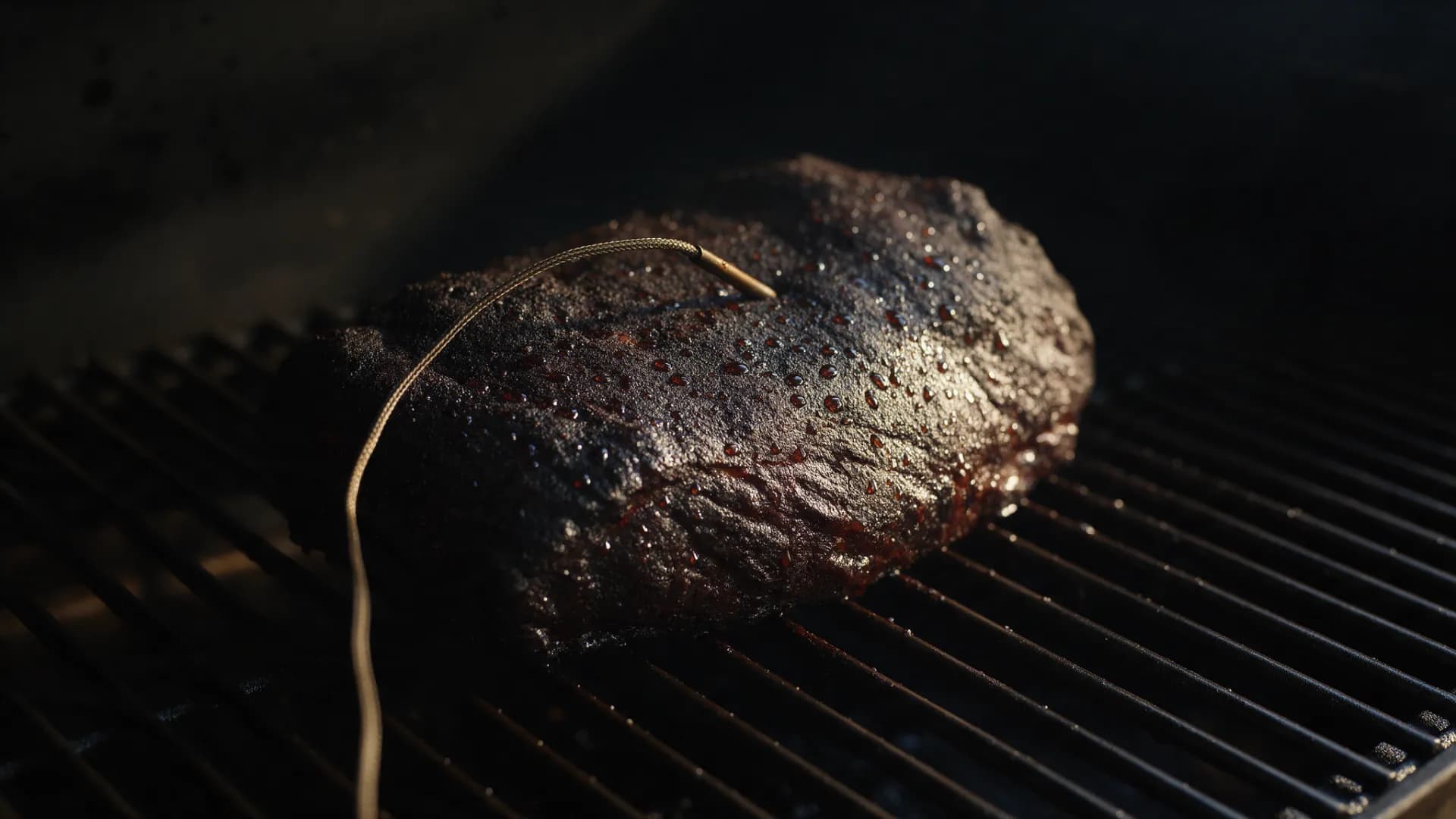 Why your brisket stops climbingthe evaporation that makes the fat side run hotter.
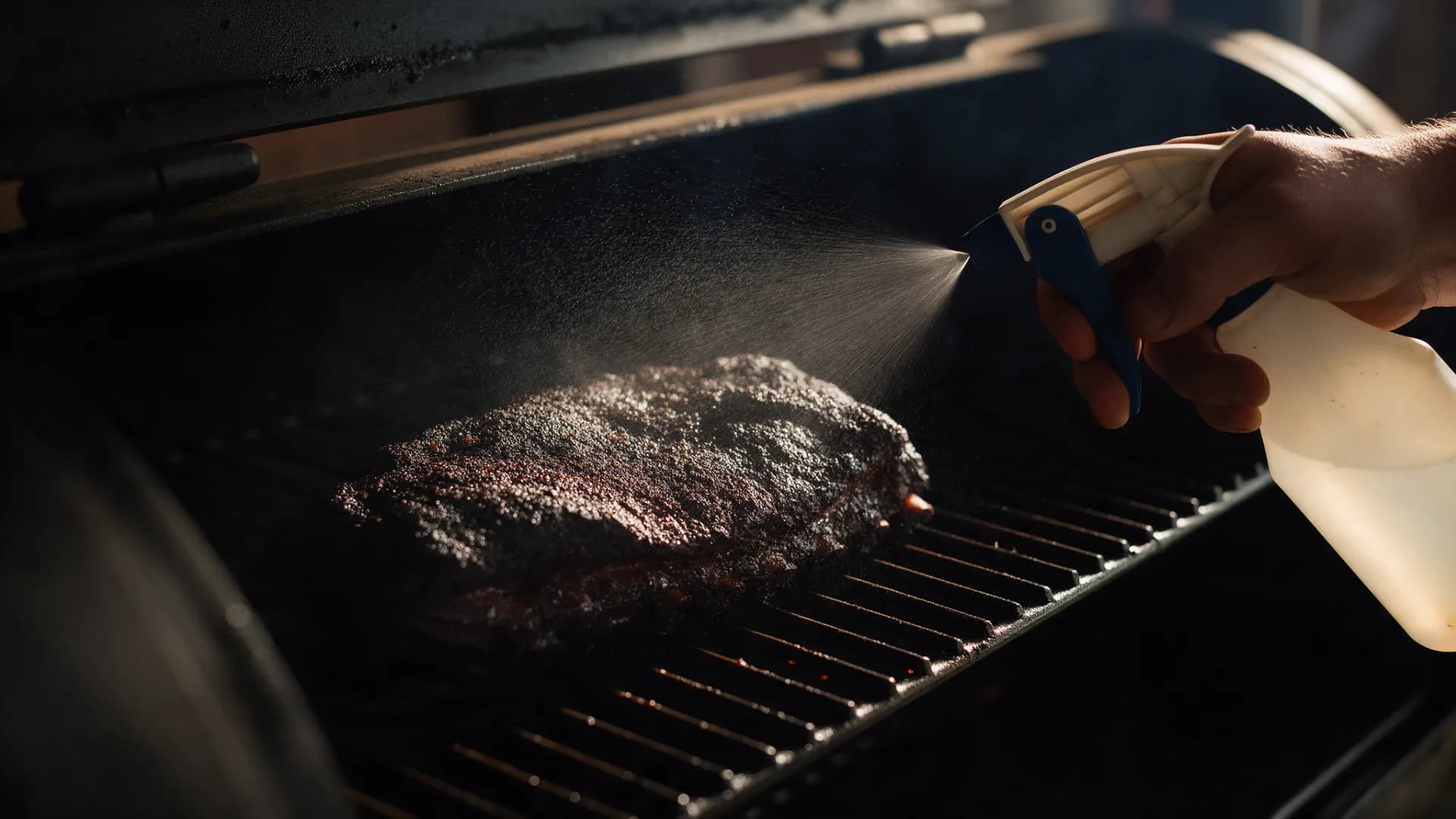 To spritz or notwhy an oily spritz behaves like a fat cap and a watery one doesn't.
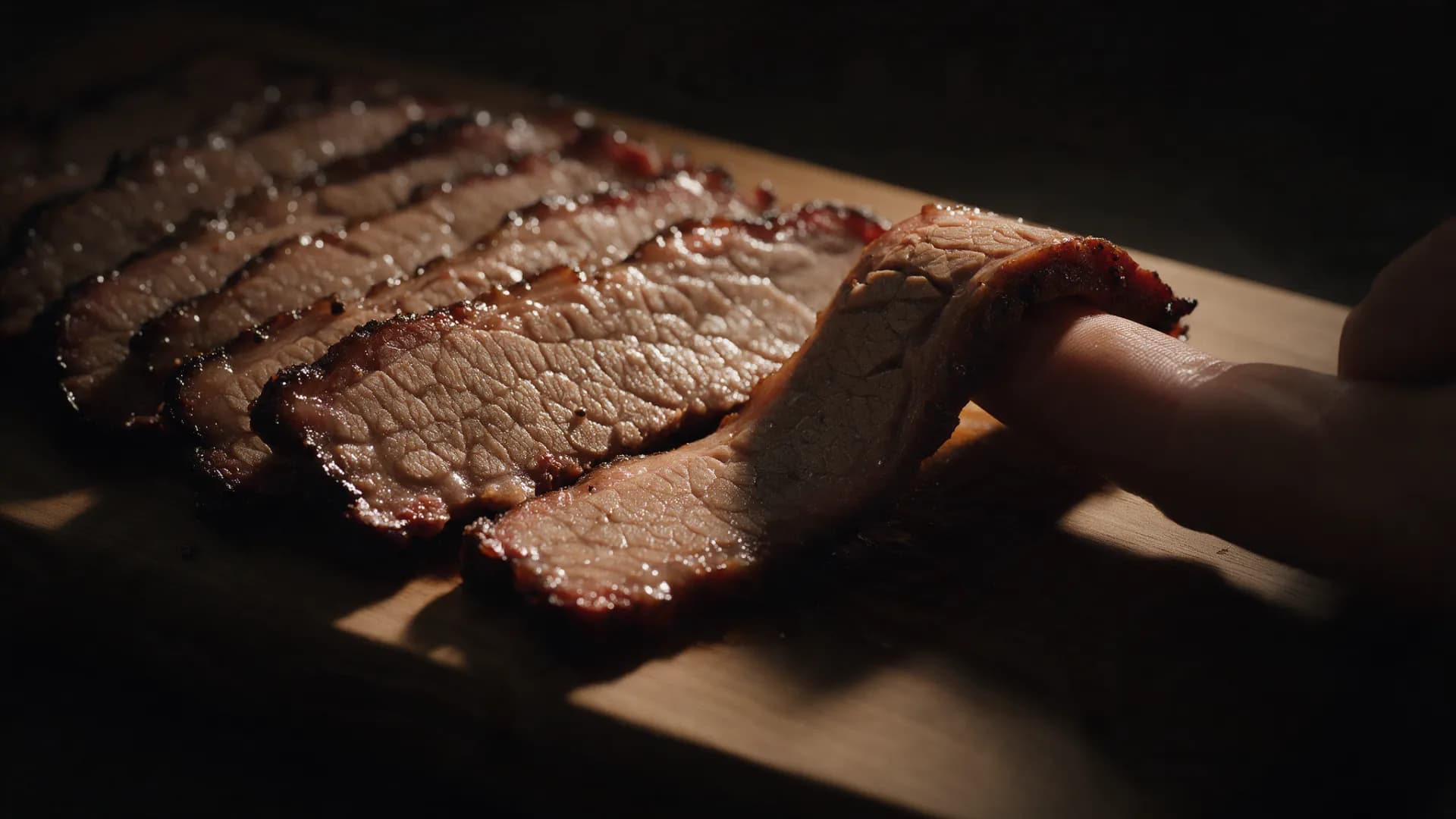 Why is my brisket dry?the lean flat, and how to read what went wrong.
For the curious
Fat's lower thermal conductivity is in Blonder's thermal properties table and Earle's thermal data. The drip rig, the stall temperatures under the cap and the cooker-dependent results are in Blonder's fat cap up or down. Mata's comment is in AmazingRibs' melting fat cap myth. The meat studies are Fletcher et al. 2021 (point vs flat by grade), Johnston et al. 2024 (Australian briskets, fat side down) and Kerth et al. 2025, all in Meat and Muscle Biology. Beef fat's melting behaviour is from Yılmaz et al. 2010. McGee's On Food and Cooking (2004) covers marbling on p.131, fat films on p.153 and rendering on p.168. Franklin's trimming and fat side are in Franklin Barbecue (Franklin and Mackay, 2015). Storage of raw meat is from healthdirect.
If you're between Rockhampton and Bundaberg and would rather someone else did the trimming for your next event, that's what I do. Get a rough price →